
Table of Contents
Cities in India are expanding faster than ever. New roads, housing clusters, and commercial zones appear every year, yet one problem persists quietly alongside them: waste. Landfills stretch further, dumping grounds creep closer to residential areas, and the conversation around sustainability often remains limited to reports, policies, and awareness campaigns that people rarely connect with emotionally.
A waste to art park approaches this problem from a completely different angle. Instead of hiding waste, it transforms discarded materials into large-scale art installations, animal sculptures, and immersive spaces that people can walk through, observe, and experience. The idea is simple, but its impact can be surprisingly deep.
Understanding the Concept of a Waste to Art Park
A waste to art park is a public space where scrap materials, industrial waste, and discarded objects are repurposed into meaningful visual forms. These are not galleries in the traditional sense. They are open environments designed to blend creativity, education, and recreation.
Unlike recycling plants or waste processing units, these parks focus on human engagement. Visitors do not read long explanations about sustainability. They understand it instinctively by seeing what waste can become when imagination and design are applied.
In many cases, the materials used would otherwise end up in landfills or remain unused for years. By converting them into art, the park extends the life of these materials while also changing how people perceive waste itself.
Why This Idea Matters More in India Than Anywhere Else?
India produces millions of tonnes of waste every year, and urban centres carry the heaviest burden. At the same time, access to green recreational spaces remains limited in many cities. Waste to art parks address both problems at once.
They create breathing spaces within dense urban areas while also opening up a conversation around sustainability that does not feel forced or technical. Families, school groups, and casual visitors engage with these spaces naturally, without being told they are “learning” something.
This is especially important in Indian cities, where environmental education often feels disconnected from everyday life. A park that quietly demonstrates reuse and creativity becomes far more effective than posters or classroom lectures.
How Waste to Art Parks Influence Public Thinking?
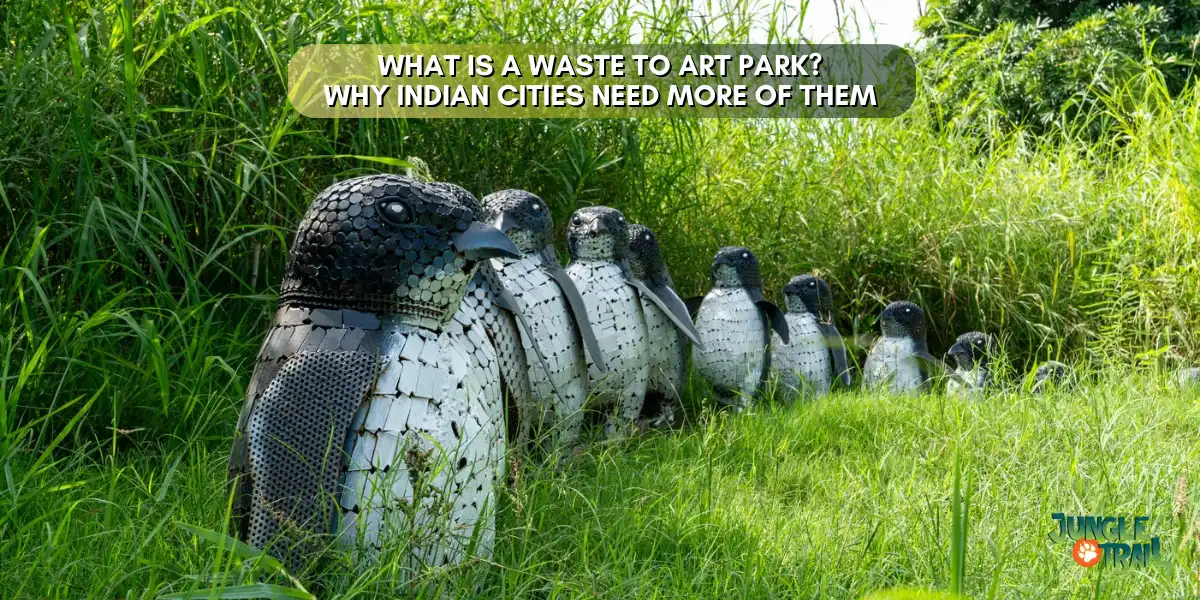
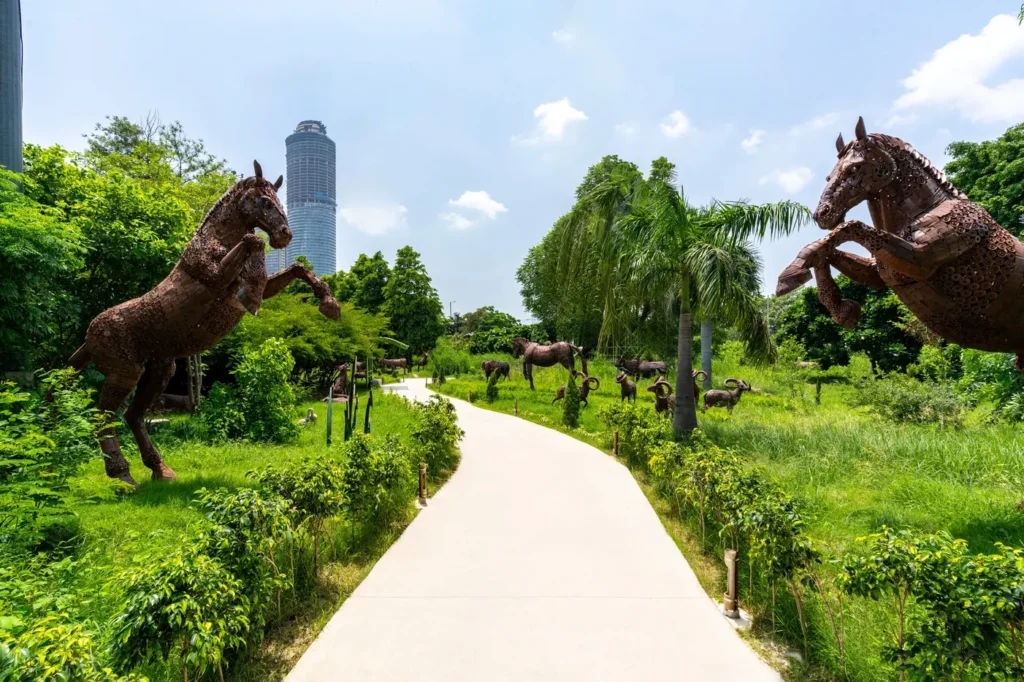
The power of these parks lies in subtle exposure. When people see large animal sculptures built from scrap metal or discarded industrial parts, it shifts their understanding of waste.
They begin to notice patterns:
- Waste is not always useless
- Design can change perception
- Sustainability does not have to feel restrictive
Over time, this exposure encourages people to question their own consumption habits. It does not preach or moralise. It simply presents an alternative way of thinking.
Spaces like Jungle Trail Noida reflect this approach well. Visitors often come expecting a park experience and leave with a new perspective on reuse, without consciously realising how that shift happened.
Learning Without Classrooms or Instructions
One of the strongest advantages of a waste-to-art park is experiential learning. Children touch the sculptures, walk through installations, and ask questions naturally. Adults engage through curiosity rather than obligation.
There are no boards telling visitors what to think. The environment itself becomes the teacher. This form of learning stays longer because it is associated with experience, not instruction.
For families, this creates shared moments where conversations emerge organically. For schools, it offers an alternative to textbook-based environmental education. For cities, it becomes a low-pressure way to build awareness at scale.
Waste to Art Parks Versus Traditional Parks
Traditional parks offer greenery and open space, which are essential. A Waste to Art Park like Jungle Trail Noida adds another layer by combining recreation with purpose.
Instead of standard play equipment alone, visitors encounter:
- Animal Sculptures with stories
- Art forms created from familiar discarded materials
- Spaces that invite reflection as well as relaxation
This does not replace traditional parks. It complements them by adding cultural and educational depth.
The Role of Design and Storytelling
A successful waste-to-art park is not just about using scrap materials. Design and storytelling play a crucial role. Each installation needs intention. Each sculpture needs context, even if it is not explicitly explained.
When done well, visitors sense coherence rather than chaos. The park feels curated, not cluttered. This distinction separates impactful projects from those that look like random scrap assemblies.
At Jungle Trail Noida, for instance, storytelling is woven into the experience itself. The layout, the sculptures, and the flow of movement all contribute to how visitors interpret the space, without overwhelming them with information.
Why Cities Should Invest in More Such Spaces?
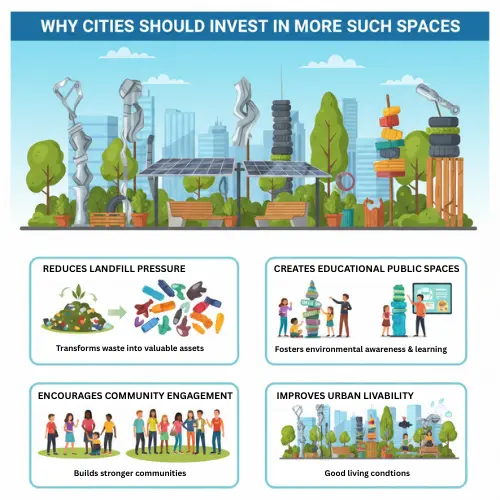
Waste-to-art parks offer long-term value beyond aesthetics. They:
- Reduce landfill pressure by reusing materials
- Create educational public spaces without heavy infrastructure
- Encourage community engagement
- Improve urban livability
Most importantly, they humanise sustainability. Instead of being a distant policy goal, it becomes something people can see, touch, and relate to.
For growing cities struggling to balance development with environmental responsibility, this model offers a practical middle ground.
A Quiet Shift in How We Build Public Spaces
The future of urban recreation in India will not depend only on bigger malls or louder amusement parks. It will depend on spaces that slow people down, spark curiosity, and leave them thinking differently than when they arrived.
Waste to art parks do exactly that. They turn what we throw away into something worth paying attention to. In doing so, they reshape not just landscapes, but mindsets.
For visitors who wish to experience this idea in real life, places like Jungle Trail Noida offer a living example of how creativity, sustainability, and public space can come together naturally.
Frequently Asked Questions
1. Are waste-to-art parks like Jungle Trail Noida safe for children?
Yes. Materials are cleaned, treated, and installed safely, making them suitable for children and families.
2. Do waste-to-art parks actually reduce waste?
They do not solve the waste problem alone, but they help reuse materials and spread awareness about reducing and segregating waste.
3. How are waste-to-art parks different from museums?
Museums are mostly indoor and focused on viewing. Waste to art parks are open spaces where people can walk, sit, and interact with the installations.
4. Can these parks help educate local communities?
Yes. They help people understand waste management in a simple, visual way, especially children and local residents.
Conclusion
As Indian cities continue to grow, the way we design public spaces will matter as much as how many we build. Waste to art parks show that sustainability does not always need complex systems or heavy messaging. Sometimes, a shift in perspective is enough.
By transforming discarded materials into experiences people can walk through and connect with, these parks quietly challenge how we think about waste, creativity, and responsibility. They offer learning without lectures, awareness without pressure, and recreation with meaning.
For cities searching for solutions that balance environmental concerns with community engagement, this model deserves serious attention. It proves that waste, when reimagined thoughtfully, can become a resource rather than a burden.