
Table of Contents
Introduction
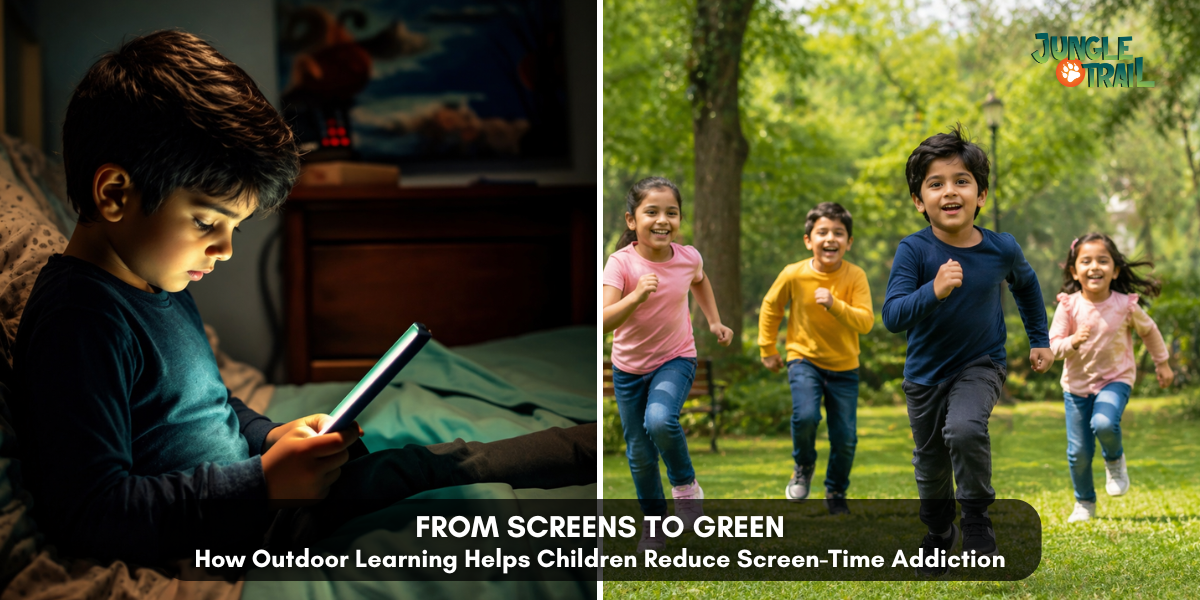
Is your child spending too much time on screens? You’re not alone. Many parents today struggle with managing screen habits while searching for better alternatives like outdoor activities, nature places, or meaningful ways to keep kids engaged.
But here’s the real question—can outdoor learning actually reduce screen-time addiction?
Instead of forcing kids to stay away from devices, what if you could replace screen time with something more exciting, engaging, and beneficial?
That’s where outdoor learning comes in. Unlike indoor routines or passive activities, it offers real-world experiences that naturally pull children away from screens.
What is Outdoor Learning?
Outdoor learning is more than just playing outside. It includes structured and unstructured activities that happen in natural environments like eco parks, green parks, or open learning spaces.
It involves:
- Exploration
- Observation
- Physical activities
- Creative thinking
Unlike indoor learning, which often keeps children seated, outdoor learning allows them to move, interact, and experience things directly.

Why Are Kids Addicted to Screens Today?
Before solving the problem, it’s important to understand it.
Children are drawn to screens because:
- Instant entertainment
- Easy access to games and videos
- Lack of engaging outdoor alternatives
When kids don’t have access to outdoor adventure or stimulating environments, screens become their default choice.
So instead of asking, “How do I stop screen time?”
Ask this: “What can replace it?”
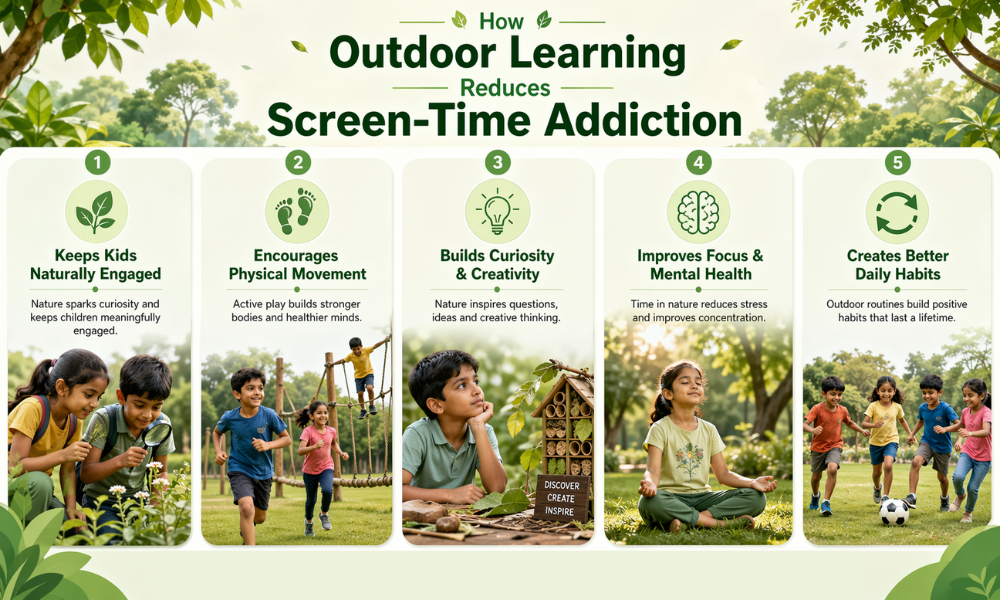
How Outdoor Learning Reduces Screen-Time Addiction
1. Keeps Kids Naturally Engaged
Outdoor spaces offer endless stimulation.
Whether it’s exploring a jungle park, observing surroundings, or participating in kids outdoor activities, children stay engaged without needing digital entertainment.
Unlike screens, nature does not feel repetitive.
2. Encourages Physical Movement
Screens promote sitting. Outdoor learning promotes movement.
Activities like:
- Walking trails
- Rope adventure
- Climbing
- Open play
These keep children physically active and reduce their dependence on devices.
It feels closer to an adventure park experience, but with learning involved.
3. Builds Curiosity and Creativity
When children interact with real environments, they start asking questions.
- Why do leaves fall?
- How are structures made?
- What do different shapes represent?
This kind of curiosity cannot develop through screens alone.
Outdoor learning spaces, especially waste to wonder park concepts, help children think creatively.
4. Improves Focus and Mental Health
Too much screen time can lead to:
- Reduced attention span
- Irritability
- Lack of focus
Spending time in nature places helps calm the mind and improves concentration.
That’s why many parents now prefer family parks and outdoor environments over indoor entertainment.
5. Creates Better Daily Habits
When outdoor activities become part of routine, screen time naturally decreases.
Instead of forcing restrictions, you are replacing habits with something better.
Children start choosing:
- Playing outside
- Exploring spaces
- Engaging in real-world activities
Over time, screens become less important.
Outdoor vs Indoor Activities: What Works Better?
Indoor activities are useful, but they often:
- Limit movement
- Reduce social interaction
- Increase screen dependency
On the other hand, outdoor learning offers:
- Freedom to explore
- Physical engagement
- Real experiences
It creates a balance between learning and play.
This is why many parents now look for picnic spots or places for picnics where kids can learn while enjoying.
Where Can You Experience Outdoor Learning?
Not every outdoor space offers structured learning.
You need places that combine:
- Nature
- Activities
- Exploration
This is where locations like Jungle Trail Noida become relevant.
It works as:
- An eco park
- A creative jungle trail park noida
- A space for outdoor activities and exploration
Children can move, explore, and engage in activities that naturally reduce screen dependency.
What to Expect in Outdoor Learning Spaces
When you visit such places, you will notice:
- Open areas instead of crowded indoor zones
- Activity sections for different age groups
- Walking paths and exploration zones
- A balance between relaxation and engagement
It does not feel like a typical amusement park in Noida filled with only thrill rides.
Instead, it offers a slower, more meaningful experience.
How Parents Can Encourage Outdoor Learning
Want to reduce your child’s screen time? Start small.
- Plan regular visits to picnic parks
- Choose outdoor activities over screen-based entertainment
- Set fixed screen limits
- Replace screen time with exploration time
Ask yourself:
Are you removing screens, or replacing them with something better?
Final Thoughts
Reducing screen-time addiction is not about strict rules. It’s about offering better alternatives.
Outdoor learning provides exactly that.
It combines:
- Learning
- Play
- Physical activity
- Creativity
Whether it’s visiting an eco park, exploring a jungle park, or spending time in green parks, these experiences help children reconnect with the real world.
And once they do, screens slowly lose their control.
Take the First Step
Looking for a simple way to reduce screen time?
Start by introducing your child to outdoor learning spaces like Jungle Trail Noida and explore a healthier, more engaging way of learning and growing.
Frequently Asked Questions
1. Can outdoor learning really reduce screen-time addiction?
Yes, it replaces screen time with engaging real-world activities, reducing dependency naturally.
2. What are the best outdoor activities for kids?
Activities like walking, climbing, rope adventure, and exploration are highly effective.
3. Is outdoor learning better than indoor learning?
Both are important, but outdoor learning adds physical activity, creativity, and real-life experience.
4. How often should kids engage in outdoor activities?
Ideally, children should spend time outdoors daily or at least several times a week.
5. Where can I take my child for outdoor learning in Noida?
Places like eco parks, family parks, and Jungle Trail Noida are good options.