
Table of Contents
Inside Jungle Trail Noida: A Sustainable Waste-to-Art Eco Park
Ever walked into a city park and felt… nothing? Just grass, benches, maybe a fountain?
In a world of screens, traffic, and concrete, don’t we crave something wilder—something that sparks curiosity, creativity, and wonder?
What if a park could bring art, wildlife, and adventure together, turning ordinary moments into unforgettable experiences?
And what if every step you took could also teach sustainability, while igniting imagination in kids and adults alike?
That’s where Jungle Trail Noida comes alive. This waste-to-art eco park blends creativity, nature, and adventure into a single playground—where wildlife-inspired trails meet immersive art, and every corner celebrates the beauty of sustainability.
Urban infrastructure keeps expanding, but urban life often feels stuck on fast-forward. Long commutes. Constant notifications. Weekends that disappear before they even begin. Our minds stay switched on, even when our bodies want rest. Is it any surprise that cities sometimes feel more mechanical than human?
This constant mental fatigue is quietly changing how people look at recreation. Loud amusement parks and ordinary green spaces no longer satisfy. What city dwellers really want are places that calm the mind while still engaging it. Spaces that restore balance, spark curiosity, and make time outdoors feel meaningful.
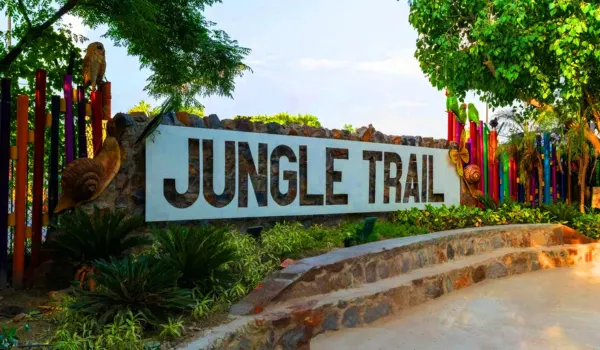
That’s exactly where Jungle Trail Noida comes in. Spread across 20 acres, this waste-to-art eco park transforms discarded materials into playful trails, creative installations, and interactive experiences. Nothing feels forced or overbuilt. Every corner encourages movement, imagination, and presence—things that urban life slowly erodes.
Think about it: when was the last time a park made you feel lighter after leaving? Jungle Trail is designed for that shift. It invites families to slow down, children to explore without screens, and adults to reconnect with something real. Sustainability here isn’t just a message—it’s an experience you carry home with you.
So why are eco parks becoming the future of urban leisure? How are cities embracing this model? And what makes Jungle Trail a benchmark for sustainable recreation in India?
This feature explores what makes an eco park special—and why Jungle Trail speaks directly to the modern urban mind.
The Evolution of Eco Parks: A New Chapter in Urban Recreation
For decades, city parks served a limited purpose: offering open green spaces for leisure. Today, with climate awareness rising and urban populations growing denser, recreational expectations have transformed. People want spaces that entertain, educate, inspire, and contribute to the environment rather than burden it.
Eco parks satisfy this demand by integrating sustainability into their design, operations, and visitor experience. From upcycled art installations to renewable-energy lighting to biodiversity education zones, eco parks are no longer passive environments. They are interactive learning landscapes.
Jungle Trail in Noida represents this evolution at an unprecedented scale—melding waste management innovation, wildlife art, environmental education, and family adventure into a single destination.
Jungle Trail Noida: India’s Largest Waste-to-Art Eco Park
Imagine a park where discarded materials come alive as art and wildlife. That’s Jungle Trail in Sector 94, Noida—India’s largest waste-to-art eco park. Every trail, sculpture, and interactive zone turns recycled materials into creative, playful experiences that inspire both children and adults.
Why Jungle Trail Stands Out
- Over 500 tonnes of scrap materials transformed into imaginative park features.
- More than 800 wildlife-inspired sculptures crafted entirely from recycled waste.
- 20-acre layout divided into themed zones for exploration, play, and learning.
- A fun, educational, and eco-friendly space for families, schools, and urban explorers.
Where Art, Nature, and Imagination Meet
At Jungle Trail, visitors can walk through wildlife sculptures, explore interactive trails, and discover themed habitats—all without harming animals or the environment. Each corner is designed to spark creativity, curiosity, and a love for nature.
As India’s largest waste-to-art eco park, Jungle Trail is more than a park—it’s a playground for imagination, art, and sustainable fun, showing how urban recreation can be both exciting and responsible.
Inside the Ecosystems: What You Experience in the Park
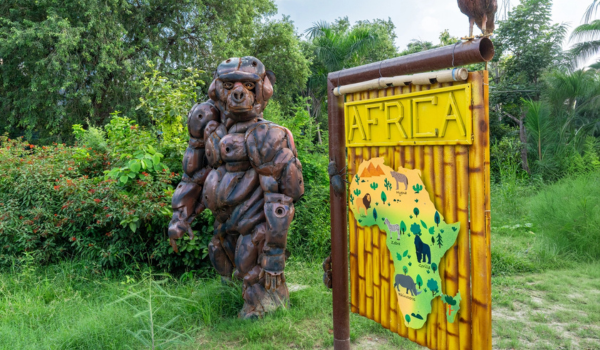
Jungle Trail is designed like a world safari, with each zone offering unique experiences inspired by different continents and ecosystems. The park combines creativity, sustainability, and adventure, turning recycled materials into stunning sculptures and interactive spaces.
Zone 1: Visitor Amenities & Facilities
Everything you need for a comfortable day out:
- Event Space – Perfect for workshops, meetups, and programs.
- Amphitheater – Open-air stage for shows and performances.
- Sports Arena – Space for games and physical activities.
- Parking – Ample and convenient.
- Toilets – Clean and accessible.
Zone 2: Australia & Asia – Wildlife & Habitats
Explore the wildlife and ecosystems of Australia and Asia:
- Sculptures and installations made from recycled materials.
- Lifelike representations of animals and habitats.
- Opportunities to learn about biodiversity in a creative way.
Zone 3: Aquazone – Europe, Alaska & Serbia
A water-themed zone with fun and relaxation:
- Aquazone – Water-inspired trails and sculptures.
- Jungle Cafe – Take a break and enjoy refreshments.
- Parking & Toilets – Convenient facilities for visitors.
- Emergency Exits – Safety and accessibility.
Zone 4: Africa & America – Adventure & Exploration
Discover wildlife and ecosystems from Africa and the Americas while enjoying active experiences:
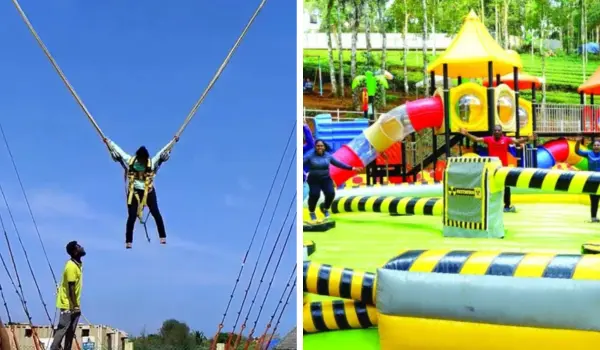
- Adventure Sports – Rope courses, climbing, and more.
- Emergency Exits – Designed for safety.
- Toilets – Clean, accessible facilities.
Amenities Designed for Comfort, Learning, and Community
Jungle Trail is not simply a sculpture park; it has been master-planned to serve families, schools, tourists, and recreational seekers.
Key Amenities
- Entry plaza with parking capacity for over 300 vehicles
- A 1,000-seat amphitheatre, ideal for cultural events, school programs, and environmental workshops
- Shaded picnic areas built from recycled materials
- Children’s play zones, integrating safe and creative designs
- A multi-cuisine food court offering refreshments for long visits
- Souvenir and exhibition spaces, promoting local artists and environmental crafts
- Eco-friendly lighting systems, enabling safe night-time exploration
- Planned night safari experience, creating a new nighttime recreational format for Noida
Every space follows green design principles and enhances visitor experience without compromising the park’s sustainability ethos.
The Activities Zone: Recreation Powered by Adventure
To complement the educational and artistic experience, Jungle Trail includes an adventure activity area offering safe, supervised recreational challenges suitable for all ages.
Full Activity List with Pricing
- Rocket Ejector – ₹250
- Archery – ₹100
- Long Boating – ₹500 (30 minutes)
- Pressure Rocket – ₹200
- Melt Down – ₹100
- Sport Climbing – ₹100 per climb
- Bull Ride – ₹100
- Water Roller – ₹200 (15 minutes)
- Boating – ₹200 (10 minutes)
These activities make Jungle Trail a complete one-day destination that blends recreation with learning, perfect for families, corporate groups, and school excursions.
Sustainability at Scale: Why This Park Matters
Jungle Trail stands as a model for sustainable development due to its scale of recycling, education, and environmental storytelling.
Upcycling 500+ Tonnes of Scrap
Instead of allowing industrial metal waste to populate landfills, the project repurposes discarded parts into functional and artistic structures. This reduces carbon footprint, lowers raw material demand, and sets a national example for circular economy principles.
Reduced Carbon Emissions
Every sculpture built from recycled metal avoids the emissions associated with manufacturing new materials. The park also reduces transport emissions by sourcing local scrap.
Environmental Education
For children, students, and families, Jungle Trail functions as a living classroom where ecological awareness becomes a hands-on experience rather than a textbook chapter.
No Real Animals Used
Unlike traditional zoos, the park promotes wildlife appreciation through art rather than captivity.
Visionaries Behind Jungle Trail: Zing Parks by Z-Tech Initiative
The creation of Jungle Trail was led by Zing Parks / Z-Tech Initiative and its sustainability-driven brand, a pioneer in developing waste-to-art theme parks across India.
Their Notable Projects Include:
- Dinosaur Park
- Waste to Wonder Park
- UP Darshan Park
- Multiple eco-art installations across Delhi NCR, Lucknow, and Prayagraj
Zing Parks combines engineering, artistry, and environmental design to build large-scale installations that stimulate imagination while promoting sustainability. The company is recognized as one of India’s leading innovators in upcycled park design.
Why Eco Parks Like Jungle Trail Are the Future of Urban Recreation
Eco parks serve urgent global and social needs:
1. Rising Environmental Awareness
Cities must balance recreation with sustainability. Eco parks offer both.
2. Family-Friendly Education
Parents increasingly prefer spaces where children learn through experience. Jungle Trail offers immersive environmental learning.
3. A Shift from Passive to Experiential Tourism
Visitors seek interactive, story-driven environments. Eco parks deliver exactly that through experiential ecosystems.
4. Sustainability as a Standard, Not a Trend
Urban planning worldwide is moving toward low-waste and eco-positive development. Jungle Trail represents how future parks will be built.
5. Health and Wellness Benefits
Ample outdoor space, fresh air, walking trails, and activity zones encourage movement—a significant value in dense cities.
The Waste-to-Art Jungle Trail: A Reimagined Zoo for the Modern City
Instead of animals behind enclosures, Jungle Trail celebrates the spirit of wildlife through art, engineering, and imagination. Every sculpture tells a story: about the planet, about reuse, about innovation, and about our responsibility to protect nature.
This is not merely a park. It is a vision—a future model for city recreation. Jungle Trail demonstrates that sustainability can be spectacular, educational, and deeply enjoyable.
Frequently Asked Questions:
1. What Defines Jungle Trail as an Eco Park and How Is It Different from Regular Parks?
Jungle Trail is classified as an eco park because it is built on sustainability-driven design principles, using over 500 tonnes of repurposed industrial scrap to create more than 800 wildlife sculptures and themed installations. Unlike traditional parks, Jungle Trail prioritizes environmental education, upcycling, conservation awareness, and immersive ecosystem storytelling rather than basic recreation or passive green space.
2. What Attractions and Ecosystem Zones Can Visitors Explore Inside Jungle Trail?
Visitors can experience a world-through-art journey across multiple global ecosystems, including deserts, wetlands, forests, polar regions, Asian jungles, and a prehistoric dinosaur zone. The park features lifelike sculptures crafted from metal waste, thematic landscapes, shaded picnic areas, a food court, play zones, boating, activity areas, an amphitheatre, and eco-friendly lighting for evening exploration.
3. Does Jungle Trail Offer Activities for Children and Families?
Yes. Jungle Trail includes a comprehensive adventure zone with safe, supervised activities suitable for all ages. Popular offerings include Rocket Ejector, Archery, Sport Climbing, Bull Ride, Water Roller, Boating, Long Boating, Pressure Rocket, and Melt Down. These experiences make the park ideal for families, school groups, and recreational outings.
4. Why Are Eco Parks Becoming the Preferred Choice for Urban Recreation?
Eco parks provide more meaningful and sustainable recreational experiences by blending creativity, environmental awareness, and outdoor activity. As cities become more congested, families increasingly prefer destinations that offer learning, nature immersion, and health benefits rather than purely commercial amusement parks. Eco parks also support climate goals by reducing waste, promoting biodiversity education, and fostering community engagement.
5. Who Developed Jungle Trail and What Sustainability Vision Guides the Park?
Jungle Trail is developed through a Public-Private Partnership between Noida Authority and Z-Tech (Zing Parks), a pioneer in waste-to-art theme parks across India. The vision behind Jungle Trail is to transform discarded materials into immersive learning environments, promote sustainability on a large scale, and inspire communities to adopt responsible environmental practices.
Conclusion: Redefining Urban Recreation with Sustainability
The future of urban recreation won’t be shaped by concrete and steel alone. It will be driven by intention, imagination, and responsibility. As cities grow faster and greener spaces shrink, one question becomes impossible to ignore—can progress exist without costing the planet? Jungle Trail answers with a quiet but confident yes.
Jungle Trail doesn’t just entertain people. It moves them. By transforming discarded materials into enticing, hands-on adventures, it gives waste a second life and purpose. Walk the paths. Touch the structures. Feel the difference. Sustainability here isn’t a theory—it’s an experience you carry with you.
These aren’t just parks you visit and forget. They are spaces that stay with you. They bring families closer to nature, spark curiosity in children, and gently remind adults of what we’ve been missing. In a time of climate anxiety and everyday burnout, isn’t joy with meaning exactly what cities need?
As urban lifestyles continue to evolve, Jungle Trail raises the bar. It proves recreation can restore rather than exploit, and entertainment can leave something behind worth remembering.
Leave a Reply