
Tag: sustainable parks

  • How Eco Parks Help Students Understand Recycling and Sustainability

    How Eco Parks Help Students Understand Recycling and Sustainability

    In 2025, educating children about recycling, sustainability, and environmental responsibility has never been more important. With increasing screen time and digital distractions, traditional classroom lessons often fail to capture young learners’ attention. Parents and teachers are now seeking hands-on, immersive learning experiences that make sustainability tangible and engaging.

    Eco parks, like Jungle Trail Noida, are emerging as ideal venues for students to connect with nature, understand recycling, and develop a sense of environmental stewardship. These parks combine educational trails, interactive workshops, and creative activities that transform abstract concepts into memorable, practical experiences.

    Why Sustainability Education Matters for Students

    Teaching students about sustainability is no longer optional—it’s a critical skill for the next generation. Beyond memorizing facts about recycling, children need real-world experiences that show them the impact of waste, the value of conservation, and the importance of biodiversity.

    Key reasons for outdoor sustainability education:

    • Cognitive Development: Students retain concepts better when they engage with the material hands-on.
    • Environmental Awareness: Early exposure to eco-practices fosters lifelong responsibility.
    • Creativity and Problem-Solving: Activities like making art from recycled materials develop innovative thinking.
    • Social and Emotional Learning: Working in groups teaches collaboration, empathy, and communication skills.
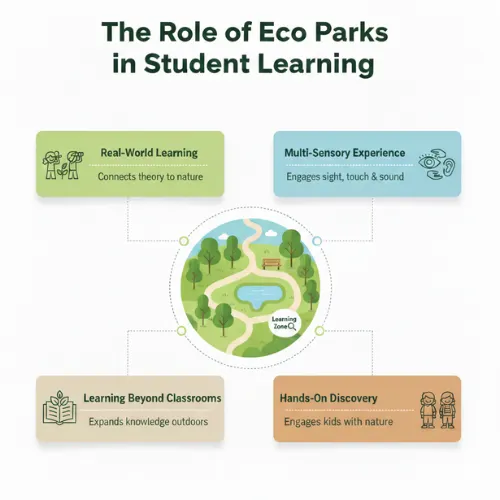
    Map infographic of an eco parks showing recycling stations, sustainability zones, and educational areas

    The Role of Eco Parks in Learning

    Eco parks provide a living classroom where students can directly observe, interact with, and learn from the natural environment. Unlike traditional classrooms, these parks offer multi-sensory learning experiences that make sustainability real and fun.

    How eco parks teach recycling and sustainability:

    1. Scrap-Art Installations: Students explore life-sized animal sculptures made from recycled materials. Each sculpture demonstrates how waste can be transformed into something valuable, reinforcing the principles of reuse and upcycling.
    2. Composting Zones: Hands-on composting sessions show students how organic waste turns into nutrient-rich soil, helping them understand circular resource management.
    3. Interactive Signage: Eco trails include boards explaining local flora, fauna, and the effects of pollution, teaching students environmental responsibility in a simple, engaging way.
    4. Waste Segregation Demonstrations: Students learn to separate biodegradable and non-biodegradable waste, reinforcing habits they can apply at home and school.

    By combining visual, tactile, and intellectual learning, eco parks create experiences that students remember long after the visit.

    Key Activities for Students at Eco Parks

    1. Scrap Art Exploration

    • Students walk through trails featuring creative sculptures made from recycled materials.
    • Encourages critical thinking, imagination, and environmental awareness.

    2. Nature Trails and Biodiversity Learning

    • Guided walks teach students about native plants, insects, and wildlife.
    • Helps children connect classroom concepts to real-world ecosystems.

    3. Eco-Workshops

    • Activities like DIY recycled crafts, eco-games, and conservation projects.
    • Develops hands-on problem-solving skills and creativity.

    4. Outdoor Adventure and Physical Learning

    5. Reflection and Observation Zones

    • Areas for journaling or sketching allow students to document observations and insights, enhancing learning retention.

    Health, Creativity, and Holistic Learning Benefits

    Eco parks deliver multidimensional growth for students:

    • Physical Fitness: Walking, climbing, and interactive trails promote active learning.
    • Cognitive Skills: Observing wildlife, understanding recycling, and participating in workshops improve attention, memory, and problem-solving.
    • Creativity: Transforming recycled materials into art stimulates imagination and innovation.
    • Social and Emotional Development: Working in groups fosters communication, empathy, and collaboration.
    • Screen-Free Engagement: Students experience real-world learning far beyond digital simulations.

    By providing a safe and engaging environment, eco parks help students develop holistic growth while fostering environmental responsibility.

    Case Study: Jungle Trail Noida

    Jungle Trail Noida is a premier example of an eco park combining learning, adventure, and sustainability.

    Highlights for Students:

    • Scrap-Art Wildlife Sculptures: Life-sized animal models made from recycled materials teach students about reuse and creativity.
    • Educational Signage and Guided Trails: Students learn biodiversity, waste management, and sustainability while exploring nature.
    • Adventure and Physical Activities: Safe rope trails, walking paths, and climbing areas support physical development.
    • Picnic and Reflection Areas: Families and students can relax while discussing lessons learned in a natural setting.

    Impact: Students leave with practical knowledge about recycling, environmental stewardship, and creativity, making their visit an immersive educational experience.

    Practical Tips for Teachers and Parents

    • Plan Ahead: Schedule visits during cooler parts of the day and arrange guided tours if available.
    • Prepare Students: Introduce recycling concepts and sustainability topics before the trip.
    • Packing Essentials: Water bottles, sun protection, hats, snacks, and notebooks for observations.
    • Encourage Participation: Let students document observations, create eco-art, or participate in composting activities.
    • Safety First: Supervise children during physical or adventure activities and follow park guidelines.

    FAQs: How Eco Parks Help Students Understand Recycling and Sustainability

    Q1: Which age group benefits most from eco park visits?

    A: Students aged 6–16 benefit most, though preschoolers can enjoy interactive trails with supervision.

    Q2: How do eco parks teach recycling effectively?

    A: Through hands-on activities, scrap-art projects, and waste segregation demonstrations, students learn recycling practically and memorably.

    Q3: Can schools organize group outings to eco parks?

    A: Yes, many eco parks, including Jungle Trail Noida, offer structured educational programs suitable for school trips.

    Q4: Are eco park activities safe for children?

    A: Absolutely. Guided trails, monitored adventure zones, and clean picnic areas ensure a safe and educational environment.

    Q5: How do eco park experiences compare to classroom learning?

    A: Eco parks provide hands-on, multi-sensory learning, which enhances retention and engagement far beyond traditional classroom lesson

    Conclusion

    Eco parks are transforming sustainability education for students in 2025. By combining scrap-art, nature trails, and interactive workshops, these parks create engaging, hands-on learning experiences that teach children about recycling, conservation, and environmental responsibility.

    Jungle Trail Noida exemplifies this approach, offering a perfect blend of adventure, creativity, and environmental education. Students gain practical knowledge, holistic growth, and memorable outdoor experiences, all while building a lifelong appreciation for the planet.


    Plan your next educational outing to an eco park and let students learn sustainability in a fun and effective way.

    cta jungle trail park noida
  • Best Picnic Parks Near Delhi NCR: Family-Friendly, Educational, and Fun Weekend Spots in 2025

    Best Picnic Parks Near Delhi NCR: Family-Friendly, Educational, and Fun Weekend Spots in 2025

    In 2025, families face unique challenges when planning weekends. With children spending increasingly more time on digital devices, social media, and TV, parents are seeking outdoor alternatives that encourage learning, creativity, and physical activity. A simple picnic is no longer just sitting on grass; it’s an opportunity for holistic growth, cognitive development, and family bonding.

    This guide highlights the best picnic parks near Delhi NCR, focusing on experiences that promote physical health, creativity, environmental awareness, and quality family time. We include insights from verified sources, visitor reviews, and research-backed benefits to help you plan meaningful outings.

    Why Outdoor Picnics Are Better Than Screen Time in 2025

    Spending weekends watching TV or on digital devices may be convenient, but research in 2025 shows that excessive screen time has negative impacts on children’s physical, emotional, and social development.

    Benefits of Outdoor Picnic Parks:

    1. Physical Health: Walking, running, and exploring nature improve fitness and motor skills.
    2. Creativity & Curiosity: Parks like Jungle Trail Noida encourage children to observe wildlife sculptures, explore eco-art, and engage in imaginative play.
    3. Educational Value: Exposure to biodiversity, art, and cultural installations fosters learning outside textbooks.
    4. Mental Health: Green spaces reduce stress and improve focus and emotional regulation in children and adults
    5. Family Bonding: Shared experiences during picnics enhance communication, emotional connection, and teamwork.
    6. Digital Detox: A structured outdoor experience helps break excessive dependency on screens.

    In short, visiting the right picnic park in 2025 is not just recreation—it’s investing in your child’s holistic growth and creating lasting family memories.

    Criteria for Selecting 2025-Ready Picnic Parks

    When choosing the best picnic parks near Delhi NCR, modern families prioritize:

    • Safety & child supervision: Enclosed paths, monitored play zones
    • Cleanliness & hygiene: Maintained lawns, washrooms, and picnic benches
    • Educational & learning opportunities: Eco-trails, art installations, wildlife sculptures
    • Physical activities: Walking, climbing, adventure courses
    • Accessibility & comfort: Easy travel, parking, shaded areas
    • Family bonding potential: Spaces to play together, organize games, and share meals
    • Affordability: Parks with low or no entry fee
    • Sustainability & environment: Exposure to eco-conscious practices, learning about recycling, wildlife, and nature

    This ensures that the park isn’t just a leisure space, but a dynamic environment for learning, creativity, and physical well-being.

    Top Picnic Parks Near Delhi NCR in 2025

    Jungle Trail Noida eco-art Sustainable Parks

    1. Jungle Trail Noida — The Eco-Art Learning Park

    Location:  Mahamaya Flyover, Sector 94, Noida, Uttar Pradesh 201301

    Why It’s Unique in 2025: Jungle Trail Noida combines waste-to-art sculptures, eco-learning, and physical exploration, making it ideal for children growing up in a digital-first world.

    Features:

    • Life-size wildlife sculptures crafted from recycled materials.
    • Educational signage explaining sustainability, ecosystems, and recycling.
    • Physical activity zones: walking trails, small adventure areas, and open lawns.
    • Family-friendly picnic lawns with shaded areas.

    Learning & Creativity: Children interact with sculptures, ask questions, and explore environmental concepts hands-on, which stimulates curiosity and problem-solving skills.

    Family & Health Benefits: Parents can relax while kids are active, improving family rapport and reducing screen dependency. Jungle Trail Noida is both an adventure and a learning space, making it one of the best picnic parks near Delhi NCR for modern families.

    Lodhi Garden in Delhi with historic monuments and green walking paths

    2. Lodhi Garden — Heritage and Mindful Exploration

    Location: Central Delhi

    Why It’s Unique: Lodhi Garden combines heritage architecture with open green spaces, offering a mix of cultural learning and physical activity.

    Features:

    • Sprawling lawns with historic tombs and monuments.
    • Walking paths shaded by century-old trees.
    • Opportunities for family yoga, sketching, and photography.

    Learning & Creativity: Children learn about Delhi’s history, observe nature, and engage in creative activities like sketching monuments.

    Family & Health Benefits: Offers calmness, mindfulness, and physical activity—a holistic alternative to digital entertainment.

    3. Nehru Park — Urban Calm and Cognitive Stimulation

    Location: Chanakyapuri, Delhi

    Features:

    • Spacious lawns for games and activities.
    • Walking paths for physical fitness.
    • Quiet areas for reading, storytelling, or sketching.

    Learning & Creativity: Children can engage in observational learning, such as spotting birds, trees, or practicing games that stimulate strategic thinking.

    Family & Health Benefits: The calm environment encourages communication, bonding, and relaxation, contrasting screen-based passive leisure.

    4. Aravalli Biodiversity Park — Environmental Learning Hub

    Location: Gurgaon

    Why It’s Unique: Restored ecosystems, biodiversity trails, and eco-signage provide hands-on environmental education.

    Features:

    • Nature trails with indigenous flora.
    • Observation points for birds and small mammals.
    • Picnic zones integrated with learning spaces.

    Learning & Creativity: Children learn real-world ecology, biodiversity, and conservation, enhancing scientific curiosity and observational skills.

    Family & Health Benefits: Physical walking promotes fitness, while discussions about ecosystems strengthen cognitive skills and family interaction.

    5. Yamuna Biodiversity Park — Tranquil Learning and Outdoor Exploration

    Location: East Delhi

    Features:

    • Lakes and wetlands for wildlife observation.
    • Quiet walking trails for nature-based learning.
    • Picnic lawns for family gatherings.

    Learning & Creativity: Children observe migratory birds and natural cycles, sparking critical thinking and environmental stewardship.

    Family & Health Benefits: Reduces stress and screen dependency while promoting active engagement and holistic growth.

    6. Noida Biodiversity Park — Accessible Outdoor Education

    Location: Noida

    Features:

    • Clean, maintained walking trails.
    • Shaded picnic areas with open lawns.
    • Nature exploration opportunities for kids.

    Learning & Creativity: Introduces children to local flora and fauna in a hands-on, engaging way, unlike passive TV viewing.

    Family & Health Benefits: Encourages outdoor movement, curiosity, and shared learning experiences.

    Dalit Prerna Sthal in Noida featuring cultural monuments and wide open spaces

    7. Rashtriya Dalit Prerna Sthal — Structured Cultural Picnic

    Location: Noida

    Features:

    • Open lawns for group activities.
    • Monuments with historical significance.
    • Safe and structured environment.

    Learning & Creativity: Combines cultural awareness with outdoor play. Children learn history and develop contextual understanding while enjoying recreational time.

    Family & Health Benefits: Promotes bonding through shared discovery and active learning.

    8. Eco Adventure Park, Gurgaon — Physical and Cognitive Challenge

    Location: Gurgaon

    Why It’s Worth Knowing: Rope courses, climbing walls, and adventure trails for families wanting a more physically intense day out.

    How Jungle Trail Compares: Jungle Trail offers a similar mix of physical challenge and picnic space, with the added benefit of the eco-art sculpture trail — giving families both adventure and a slower, exploratory pace within one visit, without a longer drive to Gurgaon.

    Why Outdoor Picnics Trump TV and Digital Leisure

    AspectOutdoor PicnicsTV/Digital Leisure
    Physical HealthWalking, running, climbing, and explorationSedentary, low activity
    CreativityStimulated via observation, exploration, and artPassive consumption
    Cognitive GrowthHands-on learning, problem-solvingMinimal skill development
    Family BondingShared activities, conversationLimited interaction
    Mental HealthReduced stress, improved focusCan increase anxiety, eye strain
    Environmental AwarenessExposure to nature and sustainabilityNo exposure
    Holistic DevelopmentPhysical, cognitive, and emotional growthMostly entertainment

    Outdoor experiences like Jungle Trail Noida encourage children to think, explore, and play creatively, which is crucial in the age of digital media saturation. These parks provide a balanced growth environment, unlike passive TV or screen time.

    Practical Tips for Modern Family Picnics

    • Pack Smart: Water, snacks, sunscreen, hats, first-aid kit, picnic mats.
    • Plan Activities: Nature scavenger hunts, sketching, family storytelling.
    • Visit at Optimal Times: Morning or late afternoon for comfort and lower crowd density.
    • Safety First: Supervise children near water bodies, adventure areas, or uneven terrain.
    • Encourage Learning: Ask questions about sculptures, plants, or wildlife to enhance cognitive engagement.

    FAQs: Planning a Family-Friendly Picnic at Parks Near Delhi NCR?

    Q1: Which parks are best for learning and creativity?

    Jungle Trail Noida, Aravalli Biodiversity, and Yamuna Biodiversity Park provide immersive learning experiences.

    Q2: Are these parks safe and family-friendly in 2025?

    Yes, all listed parks have safe walking paths, monitored zones, and child-friendly layouts.

    Q3: Can children develop skills while enjoying picnics?

    Absolutely. Outdoor exploration promotes cognitive growth, problem-solving, and creativity

    Q4: Are there parks suitable for holistic weekend activities?

    Jungle Trail Noida and Eco Adventure Park combine learning, physical activity, and family bonding in a single visit.

    Q5: What makes outdoor learning parks more beneficial than TV or digital activities?

    Unlike TV or digital entertainment, outdoor parks actively engage children’s bodies and minds. They encourage physical movement, problem-solving, creativity, social interaction, and emotional well-being.

    Conclusion

    In 2025, outdoor picnics are more than leisure—they are a strategic choice for children’s holistic development, creativity, and family bonding. The best picnic parks near Delhi NCR offer environments where children learn, explore, and develop physically and mentally, while parents enjoy stress-free relaxation and meaningful interaction.

    Jungle Trail Noida stands out for combining eco-art, sustainability education, and safe, engaging family spaces, making it a top pick for families seeking a 2025-ready picnic experience. Opt for verified, interactive, and learning-focused parks over passive screen time to ensure children grow creatively, emotionally, and physically while enjoying memorable weekends.

    Explore Jungle Trail Noida and give your children a joyful outdoor experience that nurtures growth, curiosity, and connection—starting this weekend.

    cta jungle trail park noida