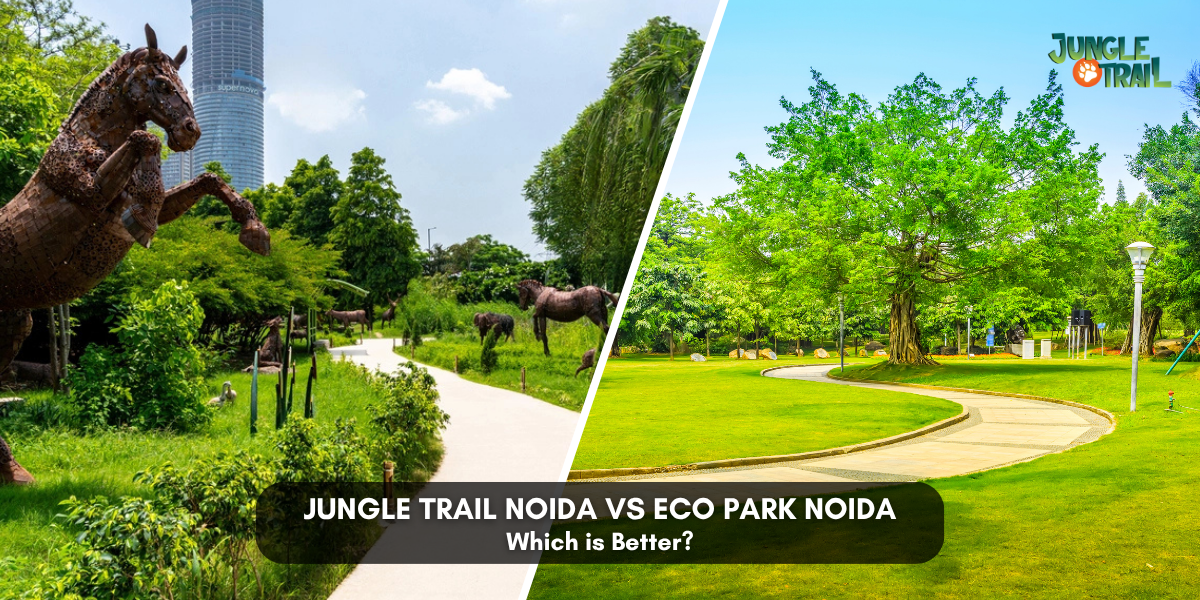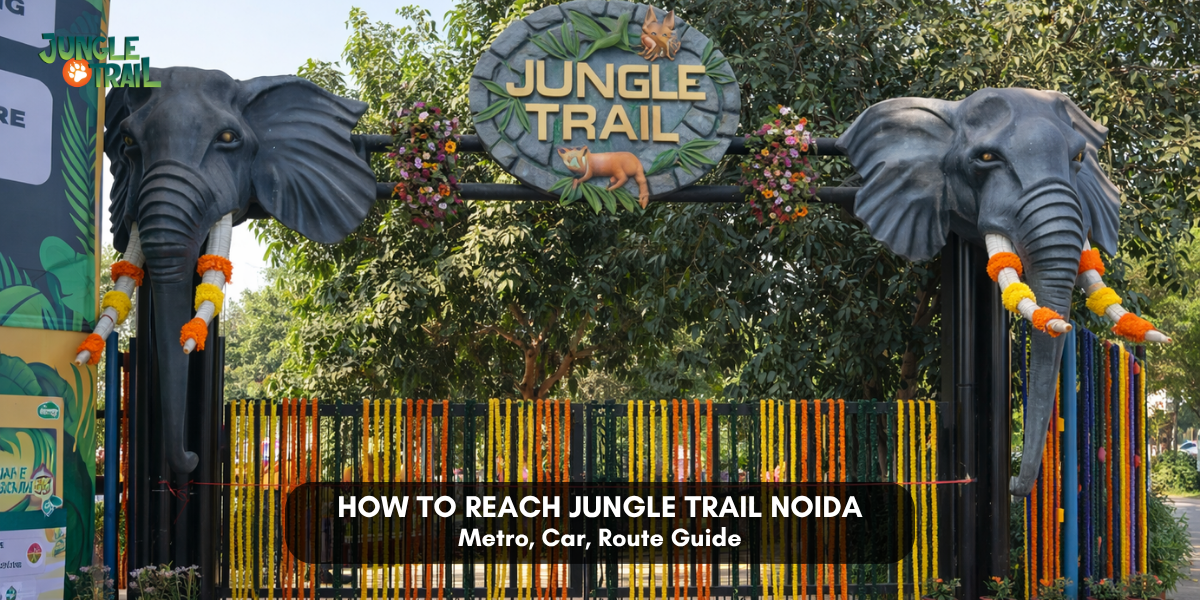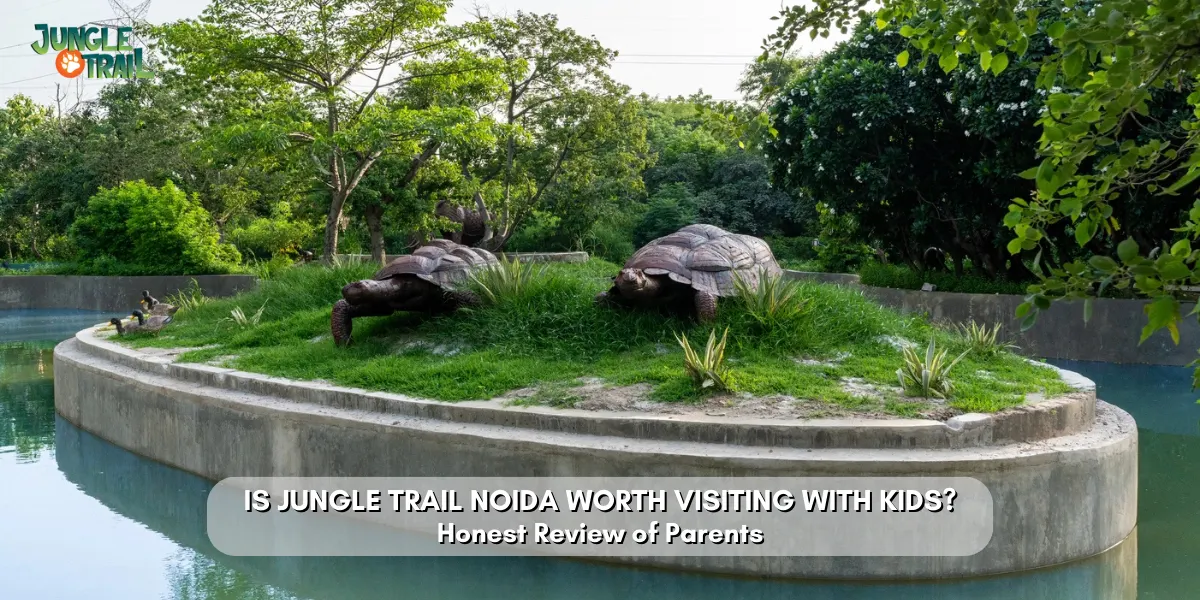

If you’re a parent in Noida or Delhi NCR, finding the perfect weekend outing with kids can be tricky. You want a place that is fun, safe, educational, and not overcrowded. Jungle Trail Noida has been getting attention online, but does it truly live up to the hype? We’ve gathered real experiences from parents and families to give you an honest picture.
Why Parents Ask This Question?
Planning a family visit involves a lot of considerations:
Is the park safe and clean for children?
Are the activities suitable for different age groups?
How crowded is it, especially on weekends?
Is it affordable and worth the time?
How long will a visit take, and is it manageable for toddlers or older kids?
Answering these questions helps parents make a confident choice and ensures kids enjoy the day without stress.
What Visitors Are Saying – Real Reviews
Neeraj Kumar Chaurasia
“I visited Jungle Trail Noida last Sunday, and it was such a refreshing experience, especially for families with kids. The jungle-themed setup makes you feel close to nature while still being safe and well-maintained. The walking trail is fun, informative, and engaging.
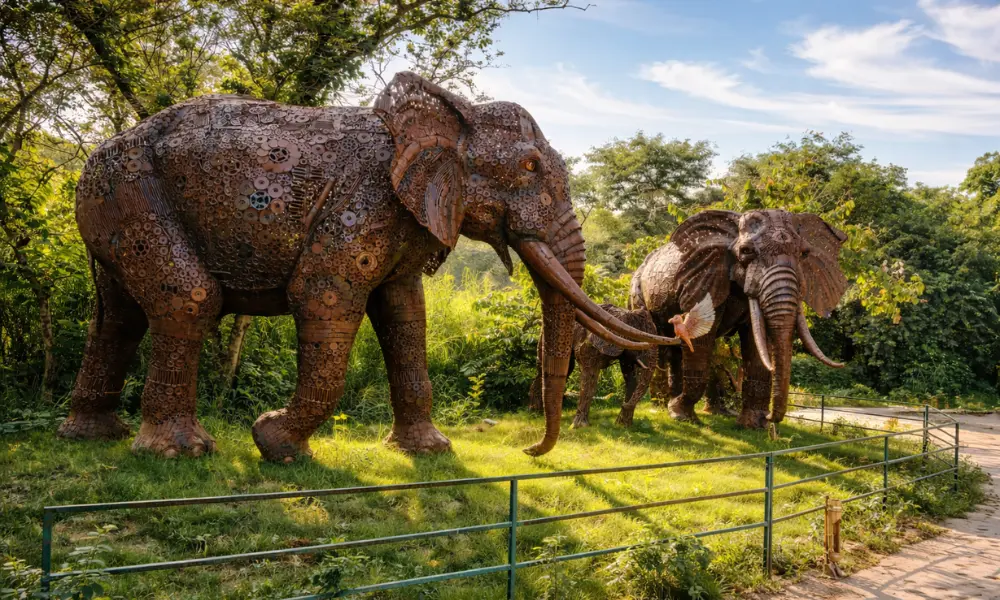
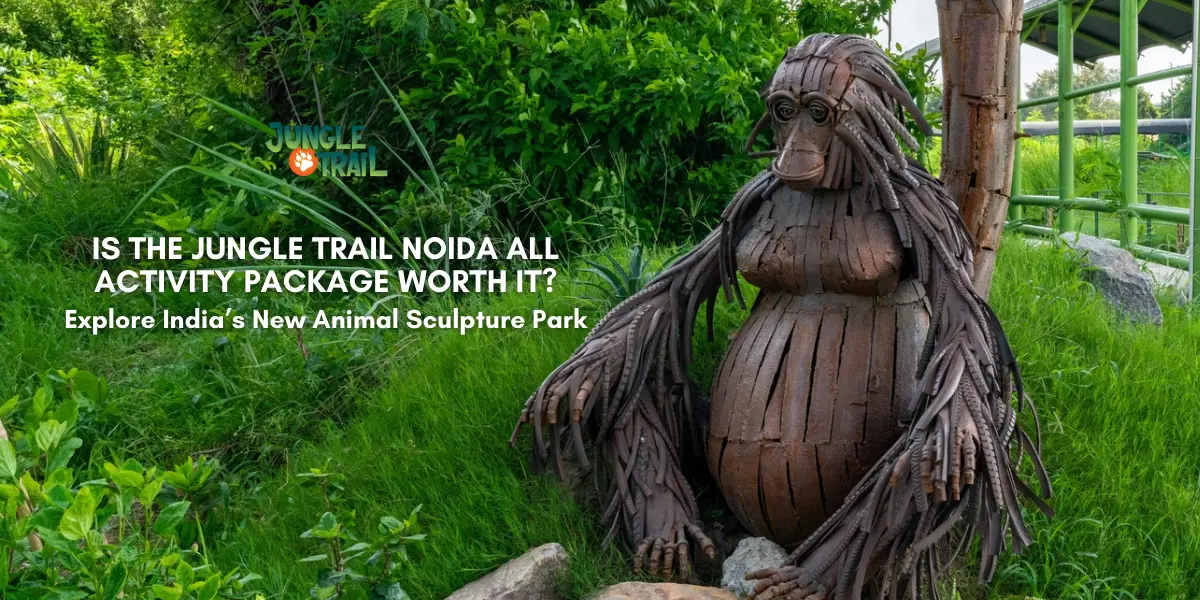
All the animals are creatively made from scrap materials, which is beautiful and sends a strong message about recycling and sustainability. Entry is ₹120 per person, and for a more relaxed visit, the electric vehicle (EV) ride is ₹200. The staff was courteous, the area clean, and overall management was smooth even on a weekend. Highly recommended for a short family outing!”
Rajat Makhija
“The wildlife displays are impressive, showcasing animals from all continents, creatively made from scrap. Each sculpture is vivid and lifelike, while also conveying a sustainability message.
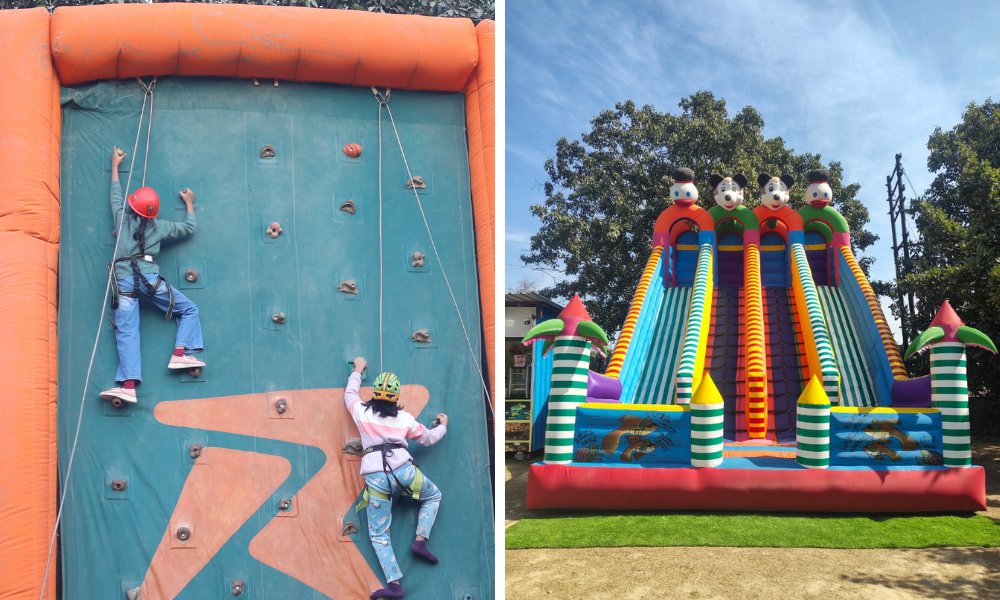
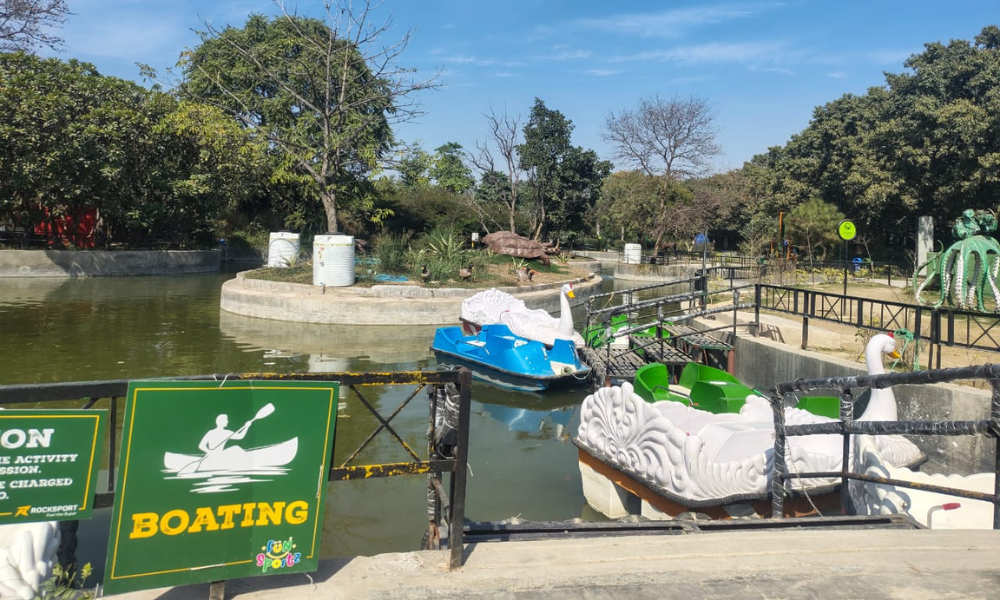
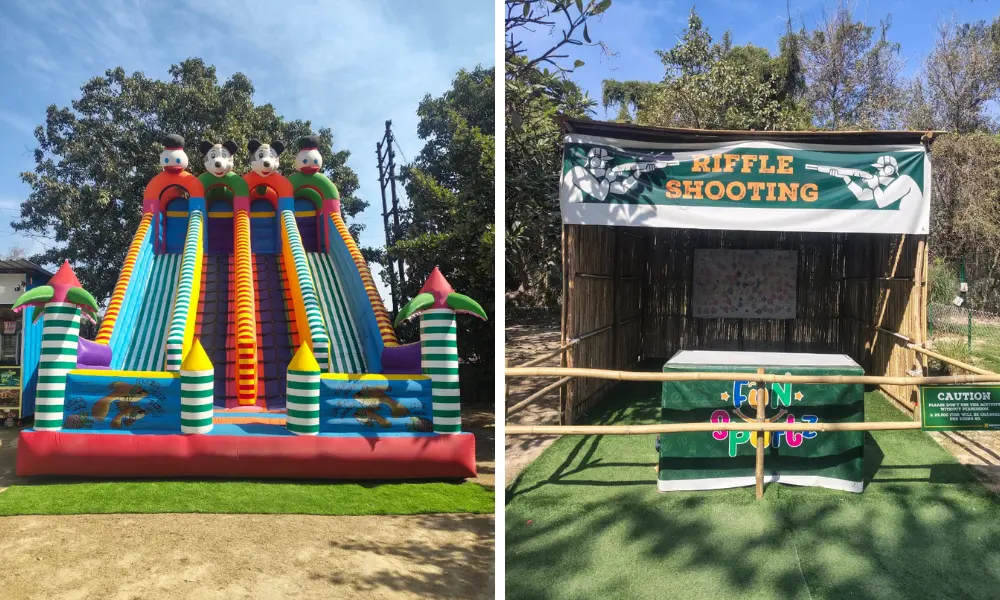
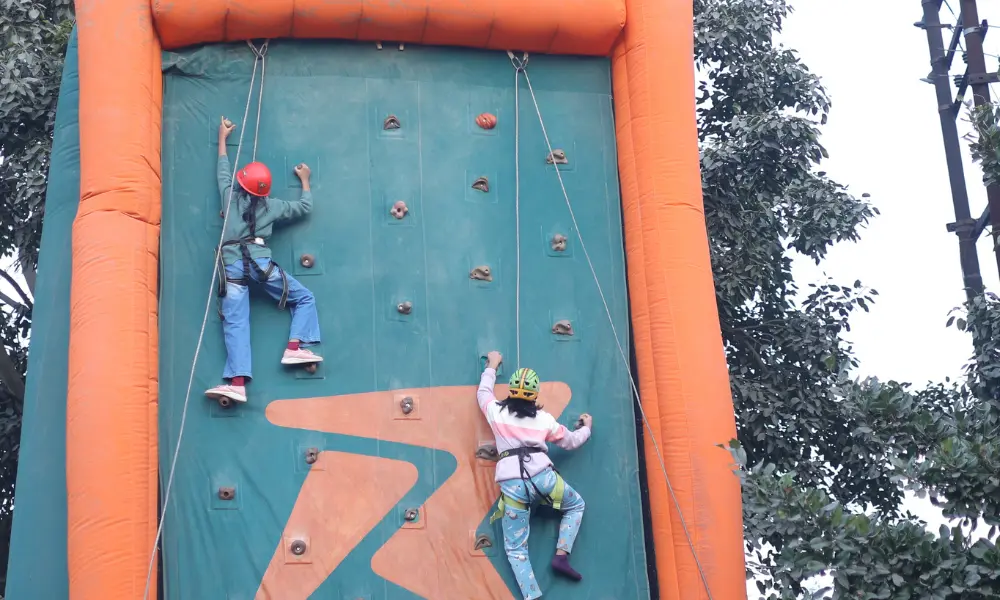
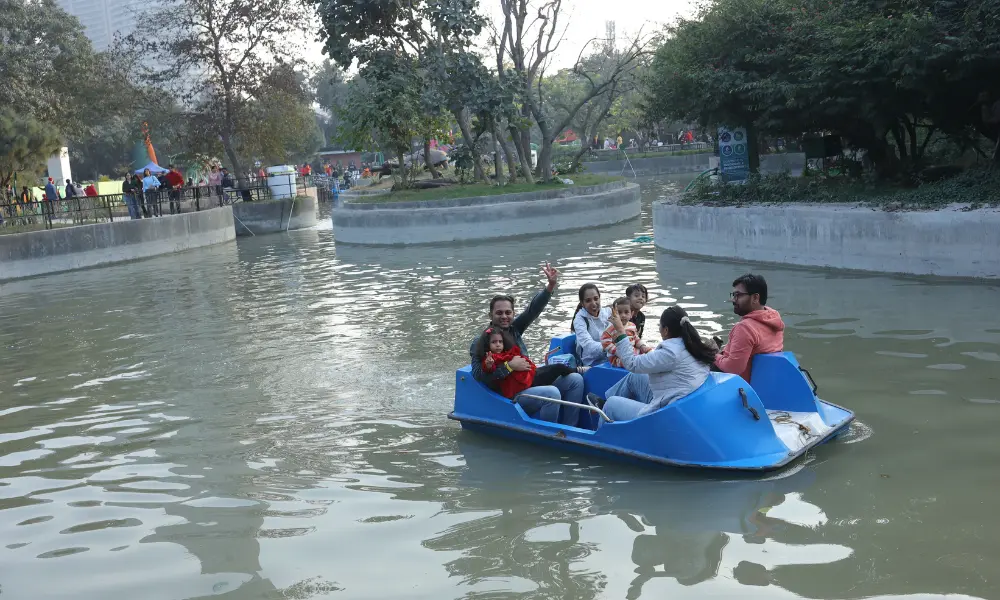
The trail is easy to walk, and multiple food outlets make it convenient for families. Golf carts for ₹200 are ideal for children or seniors. The kids’ activity zone, including boating, wall climbing, and shooting games, makes the park more than just a walking trail. The transformation of space under the Mahamaya Flyover into such a vibrant park is remarkable.”
Anshul Gaurav
“Jungle Trail is a green escape right in the city 🌿. Walking tracks are clean, and golf carts are available. Washrooms and food joints are conveniently placed, and parking is ample. Weekdays are best to avoid crowds. Perfect place to visit with kids.”
Nidhi Saxena
“Perfect for kids to explore animals from around the world. Avoid Sundays—they can be tiring, and waiting for the van can be long. To fully enjoy, plan at least 5 hours. Lots of activities and very affordable for families.”
Mohit Kumar
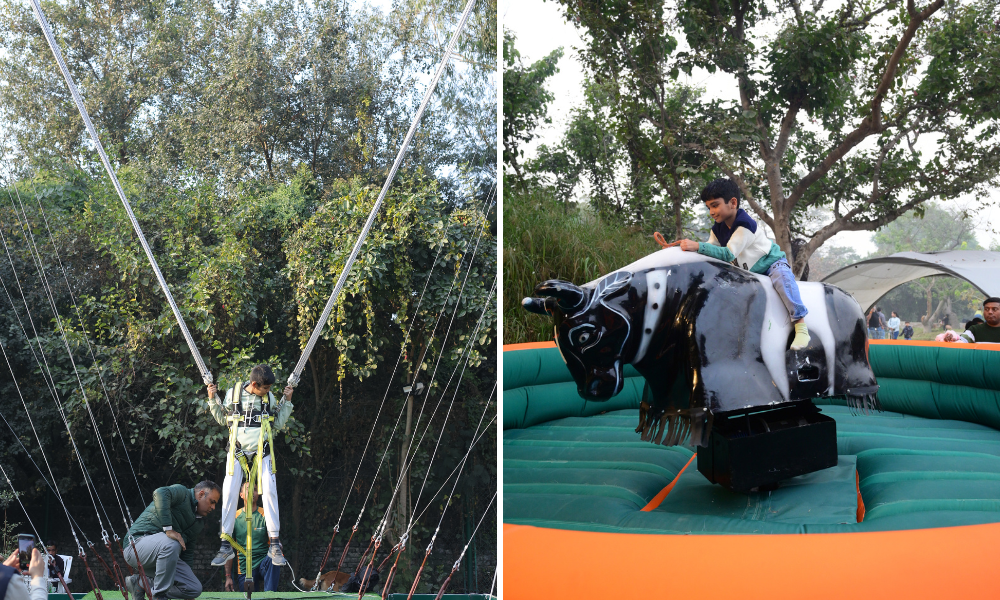
“A must-visit for kids and families. You can enjoy 3–4 hours comfortably. Entry is ₹120, free for kids under 3. Adventure activities like bull riding, rope jumping, and bull fights keep children excited.”
Nazia Jabeen
“The animal sculptures made from scrap are incredible works of art. Paid activities for children, food spots at every corner, and a fun aqua-themed play area make it ideal for families from Noida and Greater Noida.”
Tapas Varshney
“The park opened recently and is already popular. Kids can enjoy rock climbing, boating, and see animals made from waste. Restaurants serve North, South Indian, and Chinese food. Spending 2–3 hours here is enough for a fun and fulfilling visit.”
What Makes Jungle Trail Special?
Eco-friendly and Educational: Every animal is made from scrap materials, teaching children sustainability through interactive art.
Safe and Family-Friendly: Enclosed walking trails, shaded resting areas, and guided EV options for easy mobility.
Multi-Continental Wildlife Theme: Kids see animals from all seven continents, making it a global learning experience.
Adventure and Activities: Rock climbing, boating, rope jumping, bull riding, wall climbing, and aqua-themed zones.
Affordable & Convenient: Entry ₹120, EV/golf cart ₹200, free for children under 3, multiple food outlets, and ample parking.
Tips for Parents Visiting Jungle Trail Noida
Best Days to Visit: Weekdays are less crowded; weekends can be busy.
Duration: 3–5 hours to explore walking trails and activities.
What to Bring: Comfortable shoes, hats, water, and light snacks.
Facilities: Washrooms, restaurants, resting areas, and parking are available.
Accessibility: Located under the Mathe hamaya Flyover, easily reachable from Noida and Greater Noida.
Pros and Cons – Parent Perspective
Pros:
Safe, clean, and well-maintained
Creative, educational, and fun
Affordable for families
Activities for all ages
Cons:
Crowded on weekends
EV/golf cart lines may be long
Full experience requires 3–5 hours
Frequently Asked Questions
1. What is the entry fee?
₹120 per person, free for kids under 3. EV/golf cart rides cost ₹200.
2. Is it suitable for toddlers and middle-school children?
Yes, the park has age-appropriate zones, activity areas, and safe walking trails.
3. Are food and restroom facilities available?
Yes, multiple food outlets, a food court, and clean washrooms are located along the trail.
4. How long should I plan to spend at the park?
3–5 hours depending on activities and walking preferences.
Final Verdict – Is Jungle Trail Noida Worth Visiting?
Based on real parent experiences, Jungle Trail Noida is a unique, eco-friendly, and family-friendly destination. Children learn about wildlife, sustainability, and creativity while enjoying adventure activities. Parents appreciate the safety, cleanliness, and value for money.
For families looking for a weekend escape that combines fun, learning, and environmental awareness, Jungle Trail Noida is an ideal choice.
Education in urban India is undergoing a quiet but meaningful shift. As cities expand and classroom learning becomes increasingly screen-driven, educators and parents are looking for ways to reconnect students with the real world. In this transition, eco parks in Noida are emerging as powerful outdoor classrooms, offering students learning experiences rooted in observation, interaction, and environmental context rather than memorization alone.
These parks are redefining how environmental education, sustainability, and experiential learning are delivered in dense urban settings where access to nature is limited.
Why Students Learn Better Outside the Classroom?
Traditional classrooms are effective for structured instruction, but they often struggle to bring abstract concepts to life. Subjects like environmental studies, geography, and biodiversity require context, scale, and real-world reference points, something that textbooks alone cannot fully provide.
Engage multiple senses, improving memory and comprehension
Research consistently shows that learning through direct experience improves retention, curiosity, and critical thinking, especially among younger students.
What Is an Outdoor Classroom?
An outdoor classroom is a structured learning environment located outside traditional school buildings, designed to support educational objectives through interaction with physical surroundings.
Unlike free play or casual outings, outdoor classrooms are intentional. They rely on:
Observation-based learning
Guided exploration
Discussion and reflection
Real-world examples tied to curriculum concepts
Eco parks naturally function as outdoor classrooms because they combine open space, environmental design, and interpretive elements in one setting.
Why Eco Parks Work as Educational Spaces?
Eco parks are not designed solely for recreation. Their layouts, themes, and materials are often centered on environmental awareness and sustainability, making them uniquely suited for learning.
Key characteristics that support education include:
Ecosystem-based zoning that explains biodiversity
Visual installations that simplify complex ideas
Open environments that encourage inquiry and discussion
Design elements that connect human activity with environmental impact
For students, this transforms learning from theoretical knowledge into contextual understanding.
The Urban Advantage: Eco Parks in Noida
In cities like Noida, rapid urbanization has reduced everyday exposure to natural environments. Eco parks help address this gap by embedding learning opportunities within the city itself.
Noida’s eco parks:
Provide accessible green learning spaces for schools
Introduce sustainability concepts within an urban context
Offer environments where students can understand how cities and nature coexis
This urban relevance makes learning more relatable and meaningful for students growing up in metropolitan regions.
Jungle Trail Park as a Learning Environment
Jungle Trail Park in Sector 94, Noida, offers a clear example of how eco parks can function as outdoor classrooms at scale. Developed as a waste-to-wonder initiative through a Public-Private Partnership between the Noida Authority and Z-Tech, the park integrates sustainability, public art, and environmental education across a 20-acre landscape.
The park repurposes over 500 tonnes of industrial and automotive scrap into more than 800 life-sized wildlife sculptures, representing ecosystems from forests and wetlands to deserts and polar regions. This design approach turns waste management into a visible, tangible learning model.
From an educational standpoint, Jungle Trail supports learning by:
Demonstrating upcycling and circular economy principles visually
Using ecosystem-based zoning to explain biodiversity and habitats
Allowing students to compare species, climates, and environments spatially
Encouraging observation-led discussion rather than passive instruction
Rather than explaining sustainability as a concept, the park allows students to see and interpret it directly.
How Learning Happens Inside Eco Parks?
Eco parks become effective outdoor classrooms when learning is structured around exploration and reflection.
Guided Exploration
Students move through themed zones while educators encourage observation, questioning, and discussion.
Sustainability Demonstrations
Recycled materials, installations, and infrastructure help students understand waste reduction and reuse in real-world contexts.
Observation and Documentation
Students sketch, note, or photograph elements, reinforcing attention to detail and analytical thinking.
Group Reflection
Open spaces allow educators to connect observations back to classroom lessons through discussion and activities.
These methods shift students from passive listening to active participation.
Age-Wise Learning Outcomes for Students
Eco parks support different learning outcomes depending on age group:
Primary Students
Recognition of animals, plants, and habitats
Curiosity about nature
Early understanding of care for the environment
Middle School Students
Introduction to ecosystems and biodiversity
Understanding human impact on nature
Observation-based reasoning and comparison
Senior Students
Sustainability and conservation concepts
Waste management and upcycling systems
Critical thinking about urban development and ecology
This flexibility makes eco parks relevant across grade levels.
Educational Value for Schools and Educators
For schools, eco parks provide more than a field trip destination. They support:
Curriculum-aligned experiential learning
Environmental education objectives
Interdisciplinary learning across science, geography, and art
Long-term student engagement beyond the visit
Educators often find that outdoor learning experiences make classroom discussions more grounded and participatory afterward.
Why Learning in Eco Parks Stays With Students?
What students experience visually and physically is easier to recall than what they read or hear. Eco parks provide:
Strong visual anchors for abstract concepts
Emotional engagement through scale and immersion
Contextual understanding that improves long-term memory
These experiences often continue to influence how students think about sustainability and the environment long after the visit.
The Role of Eco Parks in the Future of Urban Education
As cities continue to grow, education models must adapt to limited space and increasing environmental challenges. Eco parks offer a scalable solution by integrating learning into urban public spaces.
In cities like Noida, eco parks:
Complement formal education systems
Provide accessible outdoor learning environments
Support sustainability-focused education for future generations
They represent a shift toward learning that is contextual, experiential, and connected to real-world challenges.
Frequently Asked Questions
1. What is an outdoor classroom?
An outdoor classroom is a learning environment outside traditional classrooms where students learn through direct interaction with nature and physical surroundings.
2. How do eco parks support student learning?
Eco parks enable observation-based, experiential learning that helps students understand environmental concepts more clearly and retain them longer.
3. Why are eco parks important in urban education?
Eco parks provide essential exposure to nature in urban areas, helping students connect classroom knowledge with real-world environmental systems.
Conclusion
Eco parks in Noida are reshaping student learning by transforming green spaces into functional outdoor classrooms. Through experiential design, sustainability-focused environments, and real-world learning models—such as those demonstrated at Jungle Trail Park—these spaces help students understand environmental concepts in a deeper and more lasting way. As education continues to evolve, eco parks will play an increasingly important role in creating informed, aware, and environmentally responsible learners. 👉 Don’t wait, bring students to Jungle Trail Park and let them experience learning like never before!
Cities in India are expanding faster than ever. New roads, housing clusters, and commercial zones appear every year, yet one problem persists quietly alongside them: waste. Landfills stretch further, dumping grounds creep closer to residential areas, and the conversation around sustainability often remains limited to reports, policies, and awareness campaigns that people rarely connect with emotionally.
A waste to art park approaches this problem from a completely different angle. Instead of hiding waste, it transforms discarded materials into large-scale art installations, animal sculptures, and immersive spaces that people can walk through, observe, and experience. The idea is simple, but its impact can be surprisingly deep.
Understanding the Concept of a Waste to Art Park
A waste to art park is a public space where scrap materials, industrial waste, and discarded objects are repurposed into meaningful visual forms. These are not galleries in the traditional sense. They are open environments designed to blend creativity, education, and recreation.
Unlike recycling plants or waste processing units, these parks focus on human engagement. Visitors do not read long explanations about sustainability. They understand it instinctively by seeing what waste can become when imagination and design are applied.
In many cases, the materials used would otherwise end up in landfills or remain unused for years. By converting them into art, the park extends the life of these materials while also changing how people perceive waste itself.
Why This Idea Matters More in India Than Anywhere Else?
India produces millions of tonnes of waste every year, and urban centres carry the heaviest burden. At the same time, access to green recreational spaces remains limited in many cities. Waste to art parks address both problems at once.
They create breathing spaces within dense urban areas while also opening up a conversation around sustainability that does not feel forced or technical. Families, school groups, and casual visitors engage with these spaces naturally, without being told they are “learning” something.
This is especially important in Indian cities, where environmental education often feels disconnected from everyday life. A park that quietly demonstrates reuse and creativity becomes far more effective than posters or classroom lectures.
How Waste to Art Parks Influence Public Thinking?
The power of these parks lies in subtle exposure. When people see large animal sculptures built from scrap metal or discarded industrial parts, it shifts their understanding of waste.
They begin to notice patterns:
Waste is not always useless
Design can change perception
Sustainability does not have to feel restrictive
Over time, this exposure encourages people to question their own consumption habits. It does not preach or moralise. It simply presents an alternative way of thinking.
Spaces like Jungle Trail Noida reflect this approach well. Visitors often come expecting a park experience and leave with a new perspective on reuse, without consciously realising how that shift happened.
Learning Without Classrooms or Instructions
One of the strongest advantages of a waste-to-art park is experiential learning. Children touch the sculptures, walk through installations, and ask questions naturally. Adults engage through curiosity rather than obligation.
There are no boards telling visitors what to think. The environment itself becomes the teacher. This form of learning stays longer because it is associated with experience, not instruction.
For families, this creates shared moments where conversations emerge organically. For schools, it offers an alternative to textbook-based environmental education. For cities, it becomes a low-pressure way to build awareness at scale.
Waste to Art Parks Versus Traditional Parks
Traditional parks offer greenery and open space, which are essential. A Waste to Art Park like Jungle Trail Noida adds another layer by combining recreation with purpose.
Instead of standard play equipment alone, visitors encounter:
Animal Sculptures with stories
Art forms created from familiar discarded materials
Spaces that invite reflection as well as relaxation
This does not replace traditional parks. It complements them by adding cultural and educational depth.
The Role of Design and Storytelling
A successful waste-to-art park is not just about using scrap materials. Design and storytelling play a crucial role. Each installation needs intention. Each sculpture needs context, even if it is not explicitly explained.
When done well, visitors sense coherence rather than chaos. The park feels curated, not cluttered. This distinction separates impactful projects from those that look like random scrap assemblies.
At Jungle Trail Noida, for instance, storytelling is woven into the experience itself. The layout, the sculptures, and the flow of movement all contribute to how visitors interpret the space, without overwhelming them with information.
Why Cities Should Invest in More Such Spaces?
Waste-to-art parks offer long-term value beyond aesthetics. They:
Reduce landfill pressure by reusing materials
Create educational public spaces without heavy infrastructure
Encourage community engagement
Improve urban livability
Most importantly, they humanise sustainability. Instead of being a distant policy goal, it becomes something people can see, touch, and relate to.
For growing cities struggling to balance development with environmental responsibility, this model offers a practical middle ground.
A Quiet Shift in How We Build Public Spaces
The future of urban recreation in India will not depend only on bigger malls or louder amusement parks. It will depend on spaces that slow people down, spark curiosity, and leave them thinking differently than when they arrived.
Waste to art parks do exactly that. They turn what we throw away into something worth paying attention to. In doing so, they reshape not just landscapes, but mindsets.
For visitors who wish to experience this idea in real life, places like Jungle Trail Noida offer a living example of how creativity, sustainability, and public space can come together naturally.
Frequently Asked Questions
1. Are waste-to-art parks like Jungle Trail Noida safe for children?
Yes. Materials are cleaned, treated, and installed safely, making them suitable for children and families.
2. Do waste-to-art parks actually reduce waste?
They do not solve the waste problem alone, but they help reuse materials and spread awareness about reducing and segregating waste.
3. How are waste-to-art parks different from museums?
Museums are mostly indoor and focused on viewing. Waste to art parks are open spaces where people can walk, sit, and interact with the installations.

4. Can these parks help educate local communities?
Yes. They help people understand waste management in a simple, visual way, especially children and local residents.
Conclusion
As Indian cities continue to grow, the way we design public spaces will matter as much as how many we build. Waste to art parks show that sustainability does not always need complex systems or heavy messaging. Sometimes, a shift in perspective is enough.
By transforming discarded materials into experiences people can walk through and connect with, these parks quietly challenge how we think about waste, creativity, and responsibility. They offer learning without lectures, awareness without pressure, and recreation with meaning.
For cities searching for solutions that balance environmental concerns with community engagement, this model deserves serious attention. It proves that waste, when reimagined thoughtfully, can become a resource rather than a burden.
Finding meaningful outdoor experiences in a fast-moving city like Noida is not always easy. Families often look for places that feel open, safe, and engaging without being overwhelming. Jungle Trail Noida fits into that space quietly but confidently. It offers a mix of nature, creativity, and learning that feels refreshing rather than loud. For anyone searching forthings to do in Jungle Trail, this guide walks you through what the park offers and why it has become a thoughtful choice for family outings.
Jungle Trail is also gaining attention as a new park in Noida, especially among parents who want their children to experience something beyond screens and indoor play zones. The park blends art, sustainability, and outdoor exploration in a way that feels intentional and well-planned.
What Is Jungle Trail Noida?
Jungle Trail Noida is a forest-inspired outdoor park designed around the idea of turning waste into meaningful art. Instead of traditional rides or artificial attractions, the space focuses on walking trails, open areas, and large installations created from scrap materials. The result feels closer to a nature park than an amusement destination.
Many visitors describe it as an eco park in Noida because of how strongly it connects environmental awareness with recreation. It is calm in some places, playful in others, and structured in a way that allows visitors to explore at their own pace. That balance is what makes Jungle Trail Park suitable for children, adults, and elderly visitors alike.
Things to Do in Jungle Trail Noida
This is where the park truly comes alive. The things to do in Jungle Trail are not about rushing from one activity to another. They are about slowing down, observing, and experiencing the space as a whole.
Wander Through the Animal Sculpture Made from Industrial Waste
The walking paths at Jungle Trail are designed to feel engaging and easy to follow without ever being confusing. The park is divided into continent-themed zones, letting visitors explore a variety of ecosystems in a single stroll — from arid deserts and lush wetlands to dense forests, icy polar regions, and vibrant Asian jungles.
As you wander through these zones, you’ll encounter animal sculptures, shaded resting spots, and open stretches that invite conversation, quiet observation, or family photos. Every turn offers something new to discover, making it an ideal experience for families who enjoy walking together. These trails form the heart of the things to do in Jungle Trail, combining exploration, learning, and the simple joy of being outdoors.
Fun Adventure Activities for Everyone
Ever wondered what it feels like to turn a visit into an adventure you’ll never forget? At Jungle Trail Noida, every corner invites excitement, curiosity, and discovery. Can you feel the thrill as visitors explore playful climbing stations, test their balance along interactive trails, or enjoy water-based attractions under the open sky?
The park offers a variety of outdoor activities in Noida designed to engage anyone seeking fun and exploration. From gentle challenges to more adventurous experiences, these activities spark curiosity, teamwork, and joy. Visitors can move through the park at their own pace, cheer each other on, and capture moments that turn into lasting memories.
Leisure Spaces and Photography Spots
Jungle Trail Noida isn’t just a park — it’s a place to slow down, unwind, and savor time together. As you wander through the animal sculpture park, you’ll notice incredible wildlife figures crafted from industrial materials, quietly blending art and nature. Visitors often pause here, taking in the intricate details, capturing photos, or simply letting their eyes wander across the creative installations.
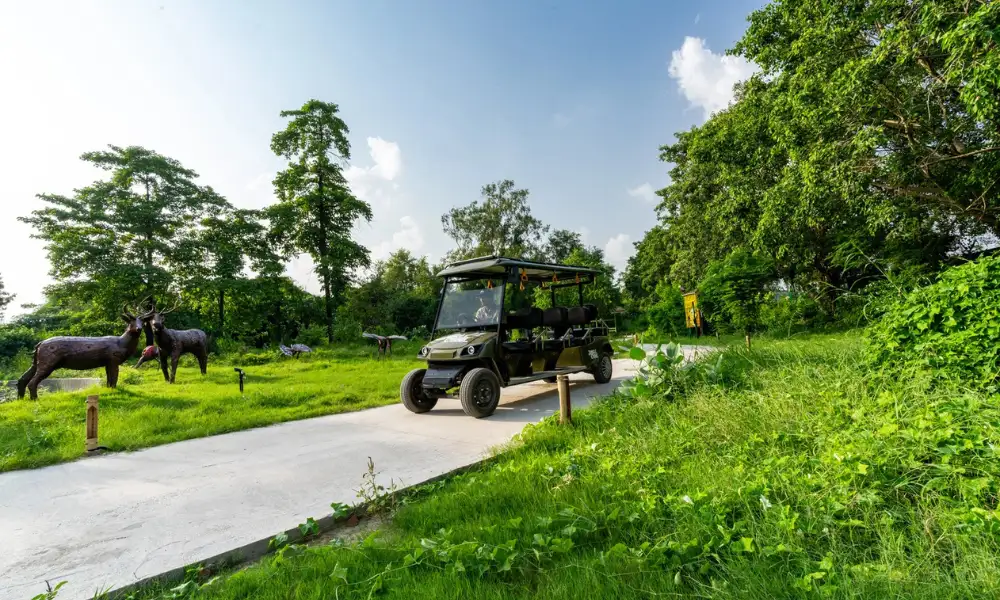
The park’s open, family-friendly zones provide plenty of space to sit, relax, and enjoy the surroundings. Grandparents, parents, and children alike can linger at their own pace, share stories, or just watch the world go by. Benches tucked into shaded spots, quiet corners near sculptures, and open areas under trees make it easy to spend meaningful time together.
Photography comes alive here too — the way sunlight shifts across sculptures in the morning, the gentle glow of evening, and the natural landscapes offer endless opportunities to pause and capture memories. It’s not about rushing from one attraction to the next; it’s about experiencing the park fully, letting each moment unfold naturally. For anyone looking for a relaxing day out in Noida, Jungle Trail is the kind of destination where time feels generous, and every visit leaves a lasting impression.
Dining Options at Jungle Trail
Hungry or in the mood for a relaxing pause? Jungle Trail Noida offers a variety of dining experiences that let visitors enjoy a meal without leaving the park. Whether it’s a cozy cafe, a multi-cuisine restaurant, regional specialties, or quick bites, there’s something for every taste and pace.
Popular spots include Mowgli Jungle Cafe, Bold Brew Cafe, Dosa Depot, Dili Cabana, BonWalk, Frozen Chemistry, and American Burger, all open from morning until late evening. Each place provides a comfortable setting to refuel, connect with companions, and enjoy the surroundings, making the visit even more enjoyable.
Why Jungle Trail Is a Unique Place to Visit in Noida With Family
Jungle Trail stands out as one of the unique places to visit in Noida with family because it suits visitors of all interests and energy levels. Children can explore freely, adults can engage with the park’s concepts, and elders can enjoy the open layout at their own pace.
The park is also educational yet subtle, presenting environmental ideas visually rather than through instructions, making learning feel natural and enjoyable.
Timings, Location, and Entry Details
Park Timings: 10 AM – 9 PM (last ticket entry 8 PM)
Its central location makes it easily accessible from major parts of the city. Most families spend 2–3 hours exploring, depending on their pace, allowing them to fully enjoy the park without feeling rushed.
Best Time to Visit
Late afternoon and early evening are ideal — the light enhances the installations, and the temperature is comfortable for walking. Weekdays are quieter for a relaxed experience, while weekends bring liveliness that some visitors enjoy. Picking the right time adds depth to the visit.
Group Bookings
School Visits: Safe, engaging, and visually educational, perfect for teaching sustainability.
Colleges and Large Groups: Flexible packages and structured access make Jungle Trail suitable for both social and educational outings.
Jungle Trail vs Other Parks in Noida
Unlike amusement parks or malls, Jungle Trail offers a calm, reflective experience. For those familiar with Waste to Wonder Park Noida, it feels like a natural extension with a stronger focus on nature and walking trails, making it one of the most accessible and unique places to visit near Sector 94 Noida.
Frequently Asked Questions (FAQs)
1. Is Jungle Trail Noida suitable for kids?
Yes. The open layout, visual installations, and safe walking paths make it comfortable for children of different age groups.
2. How much time should families plan to spend here?
Most families find two to three hours ideal for exploring the park without fatigue.
3. What makes Jungle Trail Park special?
Jungle Trail is a waste-to-wonder wildlife park where over 400–500 tonnes of industrial waste have been upcycled into life-sized animal sculptures and creative installations, blending art, sustainability, and education.
4. Are there adventure activities for visitors?
Yes — in addition to walking trails and sculptures, the park offers adventure options like zip-lining, boating, rock climbing, and more (note: these are usually ticketed separately from general entry).
Conclusion
Jungle Trail Noida offers something rare in an urban setting: space to slow down, observe, and connect. Whether you are exploring with children, spending time with elders, or simply looking for a peaceful family outing in Noida, the park delivers an experience that feels balanced and thoughtful.
For those researching things to do in Jungle Trail, the appeal lies not in loud attractions but in the way nature, creativity, and sustainability come together. As a new park in Noida, Jungle Trail continues to grow in relevance, offering families a place where time feels well spent.
Have you ever wished your child could walk among wildlife from every corner of the world without leaving Delhi NCR? Most parks are packed with slides, swings, and crowds, but after a few hours, children often remember nothing but noise, sugar, and stress. For parents, finding a weekend outing that is calm, educational, and truly memorable can feel impossible.
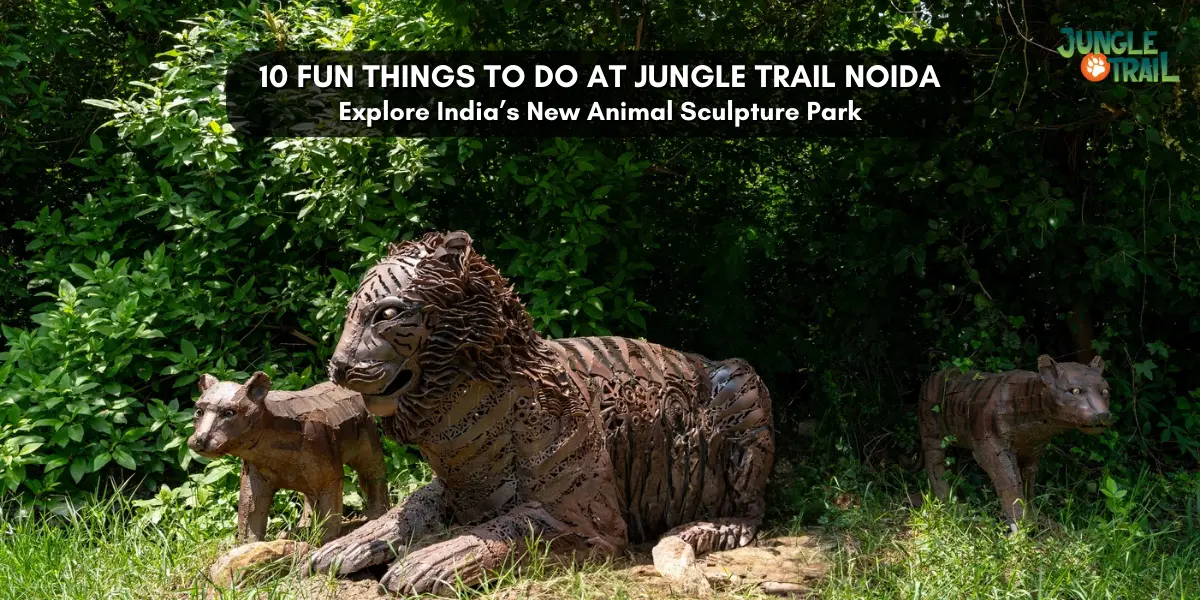
That is where Jungle Trail transforms the ordinary into something extraordinary. Spread over 20 acres, this waste-to-art park andeco nature park is a world of discovery and imagination. Children wander through over 700 life-size animal sculptures, each carefully crafted from 500 tonnes of industrial scrap, turning what was once waste into wonder. From the mighty elephants and lions of Africa to the stealthy tigers and rhinos of Asia, the playful kangaroos and cuddly koalas of Australia, the bears and wolves of North America, the llamas of South America, and even the penguins and polar bears of icy regions, every sculpture tells a story. Here, art, wildlife, and learning come together to create an adventure that is calm, immersive, and unforgettable for the whole family.
How Storytelling from Waste Brings Wildlife to Life
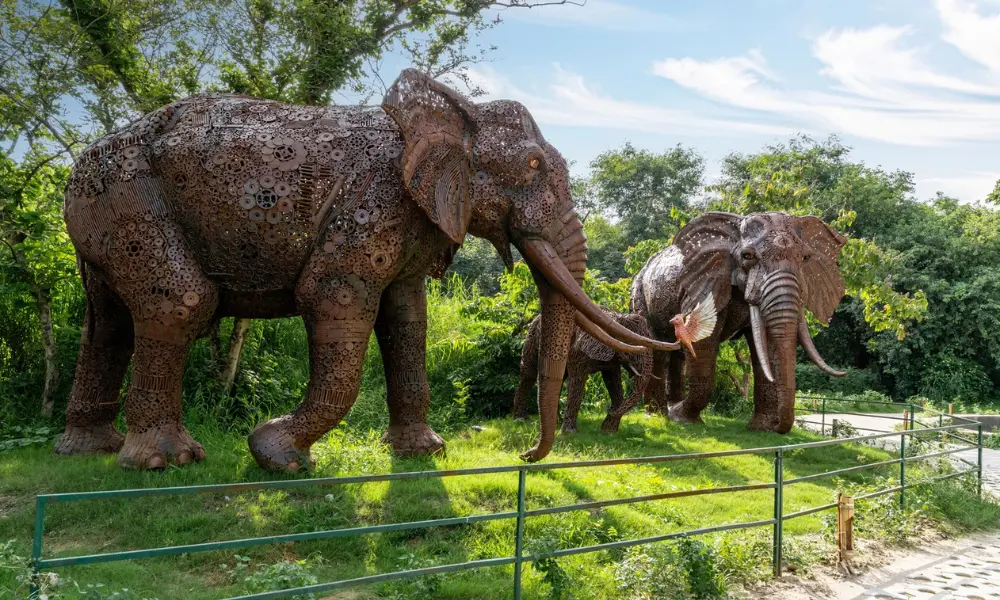
Storytelling at Jungle Trail is more than simply talking about animals. It is about bringing wildlife to life in a child’s imagination, turning each encounter into a memorable lesson. Every sculpture tells a story — where the animal lives, what it eats, and how it survives in its natural habitat. Standing before a towering elephant made from recycled metal or a penguin crafted from old machinery, children begin asking questions, imagining entire ecosystems, and remembering facts almost effortlessly.
The beauty of this approach is that it engages children without screens or pressure, helping them develop focus, curiosity, and observation skills. Parents notice the difference immediately: instead of rushing through rides, children pause, explore details, and reflect on what they see. Storytelling here becomes a bridge between fun and learning, nurturing empathy for animals, understanding of global ecosystems, and an appreciation for conservation. Beyond knowledge, it sparks creativity and critical thinking, showing children that even discarded materials can be transformed into art and purpose, making every visit a unique and enriching experience for the whole family.
A Journey Across Continents: Explore Wildlife Worldwide
Jungle Trail is more than a park. It is a mini world tour of wildlife, organized into distinct zones inspired by global habitats:
Africa: Lions, elephants, giraffes, and zebras roam the savannah zones. Children can see predator-prey interactions, herd behavior, and savannah survival.
Asia: Tigers, rhinos, and Asian elephants inhabit jungle-inspired areas. Kids learn about rainforest ecosystems and conservation efforts for endangered species.
Europe & North America: Bears, deer, and wolves showcase temperate forests, teaching about seasonal adaptation, hibernation, and food chains.
Australia: Kangaroos, koalas, and wombats introduce unique marsupial life and desert-adapted wildlife.
South America: Llamas, tropical forest animals, and exotic birds highlight rainforests and the Amazon.
Polar regions & Oceans: Penguins, polar bears, and marine life like whales and turtles illustrate icy and marine ecosystems, showing how animals adapt to extreme climates.
Each continent zone is carefully designed to immerse children and families in the feel of that environment. Children can walk, touch, observe, and learn, while parents enjoy a calm pace and shaded resting areas.
700 Sculptures and Sustainable Art Built from Waste
One of Jungle Trail’s most remarkable aspects is its use of over 500 tonnes of recycled materials. Fuel tanks, gears, chains, nuts, and bolts are transformed into amazing sculptures, benches, gazebos, and even lighting fixtures. Families see firsthand how waste can become art, creativity, and learning opportunities.
The park is a living example of sustainability in action. Children learn that discarded materials can have new life and purpose, subtly teaching lessons about conservation, creative reuse, and environmental responsibility. At night, eco-friendly lighting brings the park to life, offering a calm night safari experience where animals seem to move with the shadows.
Activities That Make Learning Fun and Calm
Activities like Rocket Ejector, Pressure Rocket, and Zorbing bring bursts of controlled excitement. Children feel the thrill of motion while staying safe, building confidence, and discovering how fun meets focus.
Archery and Sport Climbing encourage patience, coordination, and strength. Each step, aim, or climb is a small challenge that teaches children balance and body control while letting them enjoy movement at their own pace.
Playful challenges such as Melt Down and Bull Ride turn energy into laughter. Kids learn to navigate movement, maintain balance, and test their agility in ways that feel like fun rather than structured exercise.
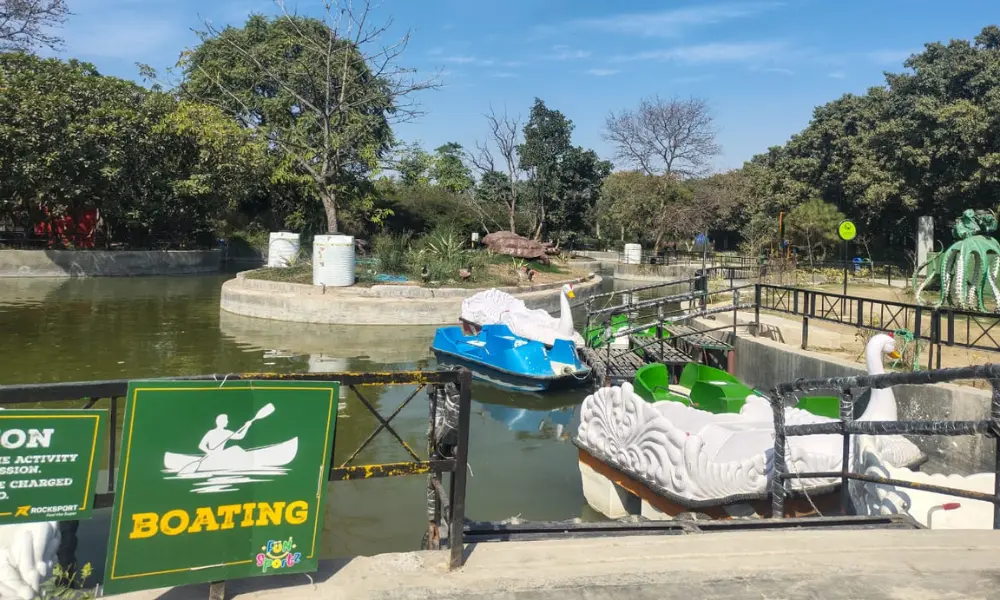
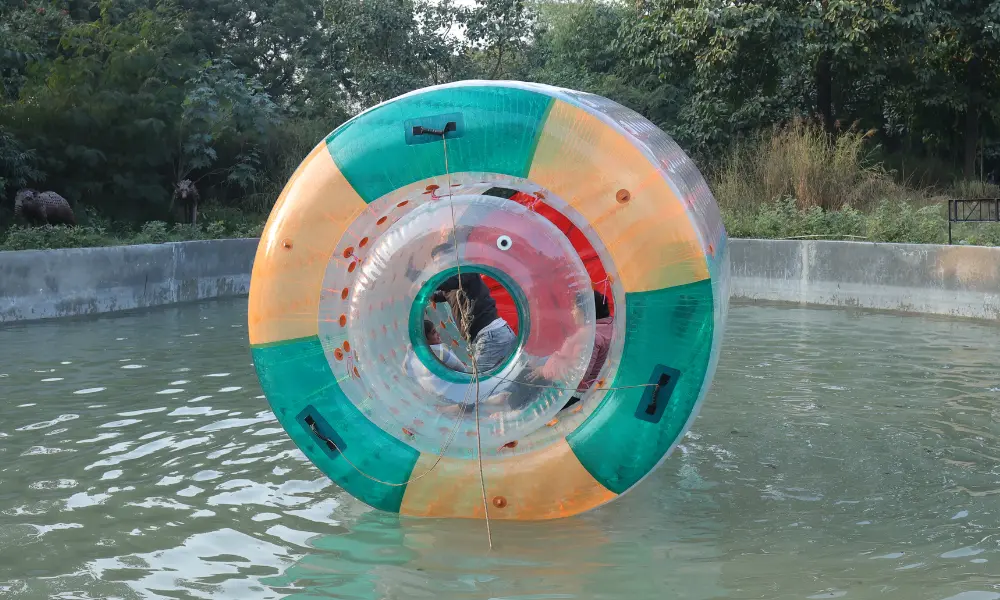
Water-based activities including Water Roller, Boating, and Long Boating, introduce slower, reflective moments. Families can sit together, watch the surroundings, and recharge before diving back into the next adventure.
The pace is calm and immersive. Parents can relax, sip tea, or take photos while their children explore and engage with art and wildlife. Unlike traditional amusement parks, families spend quality time together without noise or crowds.
Learning That Stays With You
Storytelling combined with art sparks curiosity, observation, and empathy. Children begin to understand global wildlife, ecosystems, and conservation efforts naturally. They also learn that creative thinking can turn discarded materials into something beautiful and meaningful.
For Delhi NCR families, Jungle Trail offers rare moments of calm, learning, and creativity. Kids leave excited, inspired, and reflective, and parents enjoy the peace of mind of a safe, immersive, and educational outing.
Why Families Choose Jungle Trail
Families love Jungle Trail for so many reasons. It is easy to reach from Delhi, Noida, Greater Noida, Gurgaon, and Faridabad, making it perfect for a relaxing weekend outing. The park offers open, safe spaces where children can wander, explore, and learn without feeling rushed or crowded.
The experience is designed for full-day engagement. Kids can immerse themselves in storytelling, hands-on art, and wildlife exploration, all at a gentle pace that keeps them curious but not exhausted. Parents enjoy the chance to observe, reflect, and connect while children discover new worlds and ideas.
What sets Jungle Trail apart is how it blends education with imagination. Storytelling walks reveal fascinating facts about animals from six continents, while sculptures made from recycled materials teach lessons about creativity, sustainability, and conservation. Photography lovers also find plenty of opportunities to capture stunning, memorable moments in a calm and scenic environment.
By the end of the day, families leave feeling inspired and connected. Children remember the animals, the stories, and the adventures, while parents appreciate a unique learning experience that goes beyond slides, swings, or screens.
Frequently Asked Questions About Jungle Trail
1. What is Jungle Trail, and what makes it different from other parks?
Jungle Trail is a waste to art park and eco nature park that brings wildlife, storytelling, and creativity together. Unlike traditional amusement parks, it offers calm, immersive experiences where visitors explore over 700 life-size sculptures of animals from six continents, learn about their habitats, and discover how recycled materials can become art.
2. How much time should we plan for a visit?
A full day is ideal to experience everything. With storytelling trails, hands-on art sessions, gentle adventures like boating, archery, and zorbing, and quiet spaces for reflection, visitors can explore the 20-acre park at a relaxed pace without feeling rushed.
3. Is Jungle Trail suitable for children of all ages?
Yes. The park is designed for visitors of all ages. Children enjoy interactive learning and creative activities, while adults can relax, observe, and even participate in hands-on art or photography. The safe, open spaces make it suitable for families, friends, and wildlife enthusiasts alike.
4. What sustainability practices does Jungle Trail follow?
Over 500 tonnes of industrial and automotive scrap are repurposed to create sculptures, benches, and infrastructure. This teaches visitors the value of creative reuse and reduces environmental impact. The park also uses eco-friendly lighting and promotes awareness about wildlife conservation and sustainable living.
5. Where is Jungle Trail located, and how can we reach it?
Jungle Trail is conveniently accessible from Delhi, Noida, Greater Noida, Gurgaon, and Faridabad. Its spacious 20-acre layout allows visitors to enjoy a full day of calm exploration without feeling crowded, making it perfect for a weekend getaway close to the city.
Plan Your Visit
Escape the noise and the usual weekend rush. At Jungle Trail, children can explore animals from Africa, Asia, Europe, Australia, South America, and the polar regions. They will interact with hundreds of life-size sculptures, create art inspired by wildlife, and enjoy activities designed to be calm, creative, and immersive.
Jungle Trail is not just a park. It is a journey of learning, imagination, and family connection. Discover how storytelling and art bring wildlife to life, spark curiosity, and leave lasting memories for the whole family.
Feeling Tired of Noise and Chaos at Amusement Parks? You Are Not Alone
Have you ever taken your kids to an amusement park and returned home more exhausted than they were? The traffic on the way, the endless queues, the kids screaming for rides, and that constant rush to catch every show—it can be overwhelming. You might even notice them whining halfway through the day, while you are desperately looking for a bench to sit.
This is a reality for many Delhi NCR families. Weekends are meant to recharge everyone, not leave you stressed and tired.
That is why Jungle Trail, a waste to art park, is different. This eco nature park in Delhi NCR lets families slow down, explore at their own pace, and truly spend the day together. Here, kids can run, climb, and discover, while parents finally get a moment to breathe.
Why Amusement Parks Often Fall Short
Amusement parks are exciting at first, but that excitement fades fast. The long queues, loud music, sticky floors, overpriced snacks, and overstimulated kids often leave parents frustrated. By the time you leave, everyone is cranky and exhausted.
At Jungle Trail, it’s the complete opposite. No shouting, no rushing, no waiting endlessly for a ride. Instead, children can wander among life-size sculptures made from recycled materials, explore green trails, and enjoy activities at a comfortable pace. Parents can actually sit back and watch, sip their chai, and feel relaxed.
Jungle Trail: Where Waste Becomes Art
The core of Jungle Trail is the waste to art park concept. Imagine your children walking among giant animals made from recycled materials, discovering little details on every sculpture, touching the textures, and asking questions. This is learning without screens, without noise, without queues.
This eco nature park is designed for calm exploration. You can spend a whole day:
Archery: Kids and adults can test their focus in a safe, supervised setup.
Gentle bull rides: Fun and safe for younger children.
Zorbing: Just enough thrill to make them giggle without overwhelming them.
Boating: Glide on calm waters while enjoying green surroundings.
Nature trails and scavenger hunts: Discover sculptures, spot birds, and engage curiosity naturally.
At Jungle Trail, the waste to art park is not just about looking at art. It is a full-day space where families can enjoy calm, hands-on, and playful activities. No pressure, no overstimulation, just meaningful time together.
Benefits for Families and Children
Calm and Stress-Free: Finally, a park where kids can explore and parents can relax.
Learning While Playing: The waste to art park encourages observation, creativity, and problem-solving.
Fresh Air and Greenery: Open spaces, shaded trails, and quiet corners away from the city hustle.
Full-Day Engagement: Spend the entire day trying archery, boating, zorbing, or simply strolling.
Memories That Last: Kids remember the fun of climbing, exploring, and discovering, not just rides or lines.
Ask yourself: how often does a weekend feel relaxing yet meaningful? Jungle Trail lets that happen naturally. Kids stay curious and calm, and parents leave refreshed.
Your Perfect Weekend Escape in Delhi NCR
Located near Delhi, Noida, Greater Noida, Gurgaon, and Faridabad, Jungle Trail is easy to reach and perfect for weekend outings. The eco nature park layout provides wide, shaded trails, picnic areas, and open spaces for families to spend a full day comfortably.
Picture this: start with a stroll among life-size sculptures, move to archery, then enjoy a relaxed boat ride. Take a break under a tree, and in the afternoon try zorbing. Finish the day with a scavenger hunt along winding green trails. Compare this to standing in a long queue for one ride at an amusement park.
Jungle Trail vs Amusement Parks
Aspect
Jungle Trail
Amusement Park
Archery, boating, zorbing, and nature trails
Calm and peaceful
Loud music and rides
Learning
Fun, waste to art park based
Minimal educational value
Space
Open and walkable
Crowded and congested
Activities
Archery, boating, zorbing, nature trails
Rides and shows only
Cost
Affordable
Expensive
Family Experience
Relaxed, full-day, memorable
Rush & Excessive stimulation
The waste to art park ensures children engage with nature, creativity, and art while parents relax. Families leave refreshed and inspired, not exhausted.
Tips for Visiting Jungle Trail
Visit early in the morning or late afternoon for the best comfort.
Carry water, snacks, sunscreen, and a camera to capture memories.
Let children explore sculptures and trails at their own pace.
Try all activities: archery, bull rides, zorbing, and boating.
Use shaded picnic spots for breaks and meals to make it a full-day outing.
Every corner encourages discovery, learning, and family bonding without the stress of amusement parks.
FAQs About Jungle Trail Waste to Art Park
1. What makes Jungle Trail different from regular amusement parks?
Jungle Trail is a waste to art park and eco nature park where kids explore life-size sculptures, trails, and calm activities like archery and boating. Families can spend the day without the stress of long queues or loud rides.
2. Is Jungle Trail suitable for all age groups?
Yes. Gentle bull rides, archery, zorbing, and scavenger hunts are fun for children of all ages. Adults can join activities or relax in shaded picnic areas while watching the kids play.
3. How long should we plan to spend at Jungle Trail?
Families can comfortably spend a full day at the park. Start with trails and sculptures, enjoy boating or archery in the afternoon, and finish with scavenger hunts or relaxing in picnic spots.
4. How does Jungle Trail promote learning and creativity?
Through the waste to art park concept, children discover art from recycled materials, engage with nature trails, and enjoy hands-on activities that encourage curiosity and problem-solving in a calm environment.
5. Is Jungle Trail easy to reach from Delhi NCR?
Yes. Families from Delhi, Noida, Greater Noida, Gurgaon, and Faridabad can reach Jungle Trail easily for a weekend outing. The park is spacious, safe, and perfect for full-day exploration.
A Weekend That Feels Different
The waste-to-art park at Jungle Trail offers Delhi NCR families a calm, meaningful alternative to noisy amusement parks. Children explore, create, and connect with nature while parents finally get to enjoy a relaxed, stress-free day.
This is not just a park. It is a place where sustainability, creativity, and calm family time come together. You can spend an entire day discovering, playing, and learning. A weekend here is not just fun, it is memorable in a way your family will cherish forever.
If learning truly works, why do so many experiences disappear the moment children step outside?
Why does a museum visit often end with silence While a walk through an outdoor learning park sparks conversations days later?
Parents, teachers, and even students feel this difference instinctively. The challenge is explaining why it happens.
The answer lies not in what is taught, but how learning is experienced.
The Choice Families and Educators Are Quietly Rethinking
In Delhi NCR, choices are no longer limited. Families, schools, and colleges have access to museums, galleries, exhibitions, and learning spaces of every kind.
So the question has changed.
It’s no longer “Where can we go?” It’s “Where will learning actually stay?”
Parents want learning that doesn’t feel forced. High school students want relevance. College students want ideas that connect to real life and not just theory alone.
Indoor museums and outdoor learning parks offer very different answers to that need.
How Indoor Museums Typically Teach
Museums have long been treated as the gold standard of education outside classrooms. And for good reason, they preserve history, research, and knowledge.
But their structure follows a familiar pattern:
Information is presented through text
Objects are protected behind glass
Movement is controlled
Silence is expected
Learning flows one way: display → viewer
For adults, this works. For students still developing curiosity, critical thinking, and attention control, it often doesn’t.
High school students skim. College students observe briefly and move on. Parents quietly notice attention slipping.
Not because students aren’t capable—but because the format demands patience before curiosity forms.
How Outdoor Learning Parks Teach Differently
Outdoor learning parks reverse that order.
They begin with curiosity, not explanation.
Instead of asking visitors to slow down first, they allow movement. Instead of presenting conclusions, they present surroundings.
Learning happens through:
Walking
Observing
Asking questions
Making personal connections
This matters deeply for high school and college students who are learning how to think, not just what to remember.
The Learning Difference No One Talks About
Here’s the uncomfortable truth:
Many indoor learning spaces expect students to behave like researchers before they’ve developed the mindset of one.
Outdoor learning parks don’t. Outdoor Parks let interest lead. They let questions form naturally. They allow pauses, detours, and conversation.
That freedom is not casual, but it is educational.
Learning should feel real before it feels informative.
Instead of compressing ideas into text-heavy displays, it spreads them across space. Instead of controlling how visitors move, it allows freedom and exploration.
That single difference changes everything from engagement to recall.
An Animal Sculpture Park That Teaches Through Observation
At first glance, Jungle Trail is an animal sculpture park.
But spend a little time there, and something becomes clear.
Every structure is made from recycled material. Nothing is decorative without purpose. Nothing is placed only to be seen; it’s placed to be noticed.
High school students begin asking why materials were chosen. College students start connecting sustainability with design, waste, and responsibility.
No one is lecturing. Learning unfolds naturally.
Why Sustainability Makes Sense Here (Without Being Explained)
Sustainability often fails because it’s taught abstractly.
Charts. Terms. Definitions.
At Jungle Trail, sustainability is physical.
Visitors see discarded materials transformed into animals at real scale. They understand reuse without being told to understand it.
This kind of eco-education works because it connects cause and effect visually—something indoor spaces struggle to do.
Parents often notice conversations continuing at home. That’s when learning becomes meaningful.
Museums vs Outdoor Learning Parks: A Clear Comparison
Museums often keep kids stuck in one spot, quietly reading labels or standing behind glass. Attention drifts quickly. Outdoor learning parks, however, let families and students move freely. They explore at their own pace. They ask questions as they notice things. Every discovery connects to real life, turning a simple weekend outing in Delhi NCR into something memorable and meaningful.
Aspect
Indoor Museums
Outdoor Learning Parks
Learning flow
Read → understand
See → question → connect
Physical movement
Restricted
Natural
Engagement span
Short for students
Longe
Emotional connection
Low
Strong
Learning recall
Limited
High
Suitability for school groups
Controlled
Flexible
Suitability for college exploration
Passive
Reflective
This isn’t about which is “better” in theory. It’s about which works in practice.
Why High School Students Respond Better Outdoors
High school students are at a turning point.
They question more. They resist forced instruction. They remember what feels relevant.
Outdoor learning parks allow them to:
Learn without being tested
Observe without instruction
Form opinions instead of memorising facts
That autonomy builds confidence, which is something that the museums rarely prioritise.
Why College Students Find Deeper Value
College students don’t want simplified answers. They want context.
Outdoor learning parks provide:
Real-world examples of sustainability
Connections between design, environment, and human impact
Space to think without interruption
Many college students visit not just to see, but to reflect, photograph, sketch, or discuss.
That reflective space is rare indoors.
Designed for Groups, Not Crowds
Another overlooked difference is how people feel inside the space.
Indoor museums manage visitors. Outdoor learning parks welcome participants.
At Jungle Trail, movement isn’t monitored. Paths are open. Conversations don’t feel intrusive.
Parents walk beside students—not behind them. Teachers guide, rather than control.
A Better Learning Choice for Delhi NCR
Delhi NCR families, schools, and colleges are increasingly selective.
They look for:
Screen-free learning
Outdoor educational experiences
Places that work for mixed age groups
Learning that feels relevant, not outdated
This is why outdoor learning parks are becoming preferred destinations for educational outings, not just weekend visits.
How to Experience This Kind of Learning Fully
To get the most out of an outdoor learning park:
Don’t rush
Allow silence
Let questions lead
Walk without a fixed goal
Learning doesn’t happen on schedule here. It happens through attention.
That’s what makes Jungle Trail different from structured indoor spaces.
Parents Also Ask
1. Are outdoor learning parks better than museums for students?
They often are—especially for high school and college students—because learning feels self-directed rather than imposed.
2. Can school groups visit safely?
Yes. Outdoor learning parks are designed for movement, supervision, and open exploration without crowd pressure.
3. Do college students find value here?
Absolutely. Many engage with sustainability, design, and environmental responsibility in ways classrooms can’t replicate.
4. Is this type of learning effective without explanations?
Yes. Observation-led learning improves recall and curiosity far more than forced instruction.
5. Does outdoor learning reduce screen dependency?
It naturally does. Engagement replaces distraction.
Why Outdoor Learning Parks Matter More Today
Students today are overstimulated—but under-engaged.
They consume information constantly, yet struggle to connect it meaningfully.
Outdoor learning parks slow that process down. They allow thinking to happen before interpretation.They bring learning back into the physical world.
Final Thoughts: Choosing Learning That Lasts
Museums preserve knowledge. Outdoor learning parks help students understand it.
They turn observation into curiosity. They turn movement into memory. They turn visits into conversations that continue.
That’s what Jungle Trail represents—not as an attraction, but as a learning environment built for today’s students and tomorrow’s thinking.
Ready to Choose Learning That Feels Real?
If you’re planning an educational visit—for students, families, or institutions—consider where learning is more likely to stay.
Sometimes, the most powerful lessons don’t come from standing still. They come from walking, noticing, and asking better questions—together.
Introduction: A Kids Park Where Play, Learning, and Nature Meet
“Another weekend. Same struggle: entertain the kids or survive the chaos?”
Mall or home? Screens or gaming zones? One minute they’re laughing, the next they’re bored out of their minds. Parents in Noida know this cycle all too well. Finding a kids park that’s fun, safe, and actually worth the time can feel impossible.
That’s where Jungle Trail changes everything.
Located in Noida, Jungle Trail isn’t just another amusement park. It’s a thoughtfully designed kids park where nature, learning, and play come together—so weekends feel calmer, longer, and truly enjoyable for both kids and parents.
What Families Are Really Looking for in a Kids Park in Noida
Most families searching online aren’t just looking for fun.
Jungle Trail brings all of this together in one place—without forcing excitement or overstimulation.
Why Jungle Trail Was Created
Traditional amusement parks focus on speed, noise, and constant thrill. Green parks offer peace, but little engagement. Malls fill time, not memories.
Jungle Trail was created to sit between these extremes.
It is designed as an urban oasis—a space where children stay curious, parents stay relaxed, and families spend real time together. Not rushing. Not queuing. Just exploring.
Why Jungle Trail Is the Best Kids Park in Noida
Children get bored easily when play is repetitive. At Jungle Trail, movement changes every few steps.
Parents worry about safety. Here, activities are supervised, zones are open, and visibility is clear.
Weekends often feel rushed. This park is built for slow exploration, not fast exits.
Learning is missing in most parks. Here, learning happens naturally—through visuals, stories, and questions.
That balance is what makes Jungle Trail different.
Is Jungle Trail Right for Your Family?
Let’s be honest.
If you are looking for extreme thrill rides, loud music, and fast-paced entertainment, this may not be the right place.
But if:
Your child enjoys walking, discovering, and asking questions
You want outdoor play without chaos
You prefer calm fun over constant noise
You want learning to happen without pressure
Then Jungle Trail fits perfectly.
A Unique Waste-to-Art Jungle Experience
Jungle Trail follows the idea of a waste-to-wonder park, but goes deeper.
There are no animals in captivity. Instead, children explore life-sized animal sculptures made from recycled metal—each one representing wildlife from different continents.
This eco park is built around sustainable tourism in India, turning industrial scrap into art, stories, and learning spaces.
For children, it’s visually exciting. For parents, it feels responsible. For schools, it becomes a real educational experience.
Explore the Jungle Zones at Jungle Trail
Zone 1 – Family Comfort & Community Spaces
Inspired by community parks, this zone focuses on comfort.
Clean washrooms, shaded seating, event spaces, and an amphitheatre make it easy for families to settle in and plan a relaxed day.
Zone 2 – Australia & Asia Wildlife Trail
This zone is ideal for a calm nature walk.
Children explore wildlife representations from Asia and Australia, learning about habitats and biodiversity in a visual, engaging way. It’s quiet, thoughtful, and perfect for curious minds.
Zone 3 – Aquazone Adventures
For families searching boating near me, this zone offers water-based fun without chaos.
Boating and long boating experiences are designed with safety in mind, making them enjoyable for both children and adults.
Zone 4 – Africa & America Adventure Zone
This is the active zone.
Designed like modern adventure parks, it includes wall climbing, zorbing, and the popular rocket ejector. These activities offer controlled excitement with trained supervision, suitable for kids and grown-ups alike.
Adventure Without Overstimulation
Unlike typical amusement parks in Noida, Jungle Trail doesn’t push constant adrenaline.
Adventure here is spaced out. Noise is controlled. Children can pause, rest, and return to play.
This balance keeps kids engaged longer—and less exhausted.
Activities Kids & Parents Love at Jungle Trail
Activities are grouped thoughtfully, not scattered.
Water activities like boating and long boating bring calm fun. Movement-based activities such as wall climbing and zorbing build confidence. Skill and fun rides like bull rides and pressure rockets add excitement without fear.
Parents can watch comfortably while kids explore independently.
A Picnic Spot That Actually Works for Families
Many people search for picnic spots or picnic parks near me hoping for space and comfort.
Jungle Trail delivers that.
Shaded seating areas Clean, accessible washrooms Multiple food outlets Open green spaces for families
It feels like a picnic—without stress.
Learning Without Classrooms: Sustainable Tourism Through Wildlife Stories
Jungle Trail supports educational tours and educational tourism through experience, not instruction.
Children see how scrap metal becomes art. They understand sustainability visually. Environmental awareness becomes memorable, not theoretical.
This makes the park ideal for schools, learning programs, and parents who value meaningful outings.
School & College Outings With Purpose: Wildlife, Art & Sustainability
From school trips to college outings, Jungle Trail offers structured group experiences.
Easy access from key city points Flexible group packages A balance of learning and recreation
It’s one of the most engaging fun things to do in Noida for organised groups.
How Jungle Trail Is Different From a Typical Amusement Park
Most amusement parks are designed for speed. Jungle Trail is designed for time.
We offer you the Time to walk, the time to observe & Time to connect.
That difference changes how children remember the day.
Plan Your Visit to Jungle Trail Noida
Before visiting, check:
Park timings
How to reach
Parking availability
Pet policy
Visitor rules
Everything is planned to make your visit smooth and stress-free.
Frequently Asked Questions
Is Jungle Trail suitable for young children? Yes. Zones are open, activities are supervised, and movement is natural.
How is this different from an amusement park in Noida? It focuses on calm fun, learning, and exploration instead of noise and speed.
Can families spend a full day here? Yes. Most visitors comfortably spend several hours exploring all zones.
Is it good for school trips? Yes. It supports educational tours with safety and learning built in.
Does Jungle Trail promote sustainability? Yes. The entire park is based on waste-to-art and environmental awareness.
Final Thought
Jungle Trail is more than just a kids’ park—it’s a thoughtfully crafted space where play has meaning, curiosity is encouraged, and families reconnect at a slower, more natural pace. Every trail, activity, and zone is designed to spark discovery, promote learning without pressure, and create moments that children remember long after the day ends. In a city full of fast развлечions, Jungle Trail stands out in Noida as a place where fun feels balanced, time feels unhurried, and family experiences feel truly worthwhile.
Inside Jungle Trail Noida: A Sustainable Waste-to-Art Eco Park
Ever walked into a city park and felt… nothing? Just grass, benches, maybe a fountain? In a world of screens, traffic, and concrete, don’t we crave something wilder—something that sparks curiosity, creativity, and wonder? What if a park could bring art, wildlife, and adventure together, turning ordinary moments into unforgettable experiences? And what if every step you took could also teach sustainability, while igniting imagination in kids and adults alike?
That’s where Jungle Trail Noida comes alive. This waste-to-art eco park blends creativity, nature, and adventure into a single playground—where wildlife-inspired trails meet immersive art, and every corner celebrates the beauty of sustainability.
Urban infrastructure keeps expanding, but urban life often feels stuck on fast-forward. Long commutes. Constant notifications. Weekends that disappear before they even begin. Our minds stay switched on, even when our bodies want rest. Is it any surprise that cities sometimes feel more mechanical than human?
This constant mental fatigue is quietly changing how people look at recreation. Loud amusement parks and ordinary green spaces no longer satisfy. What city dwellers really want are places that calm the mind while still engaging it. Spaces that restore balance, spark curiosity, and make time outdoors feel meaningful.
That’s exactly where Jungle Trail Noida comes in. Spread across 20 acres, this waste-to-art eco park transforms discarded materials into playful trails, creative installations, and interactive experiences. Nothing feels forced or overbuilt. Every corner encourages movement, imagination, and presence—things that urban life slowly erodes.
Think about it: when was the last time a park made you feel lighter after leaving? Jungle Trail is designed for that shift. It invites families to slow down, children to explore without screens, and adults to reconnect with something real. Sustainability here isn’t just a message—it’s an experience you carry home with you.
So why are eco parks becoming the future of urban leisure? How are cities embracing this model? And what makes Jungle Trail a benchmark for sustainable recreation in India?
This feature explores what makes an eco park special—and why Jungle Trail speaks directly to the modern urban mind.
The Evolution of Eco Parks: A New Chapter in Urban Recreation
For decades, city parks served a limited purpose: offering open green spaces for leisure. Today, with climate awareness rising and urban populations growing denser, recreational expectations have transformed. People want spaces that entertain, educate, inspire, and contribute to the environment rather than burden it.
Eco parks satisfy this demand by integrating sustainability into their design, operations, and visitor experience. From upcycled art installations to renewable-energy lighting to biodiversity education zones, eco parks are no longer passive environments. They are interactive learning landscapes.
Jungle Trail in Noida represents this evolution at an unprecedented scale—melding waste management innovation, wildlife art, environmental education, and family adventure into a single destination.
Jungle Trail Noida: India’s Largest Waste-to-Art Eco Park
Imagine a park where discarded materials come alive as art and wildlife. That’s Jungle Trail in Sector 94, Noida—India’s largest waste-to-art eco park. Every trail, sculpture, and interactive zone turns recycled materials into creative, playful experiences that inspire both children and adults.
Why Jungle Trail Stands Out
Over 500 tonnes of scrap materials transformed into imaginative park features.
More than 800 wildlife-inspired sculptures crafted entirely from recycled waste.
20-acre layout divided into themed zones for exploration, play, and learning.
A fun, educational, and eco-friendly space for families, schools, and urban explorers.
Where Art, Nature, and Imagination Meet
At Jungle Trail, visitors can walk through wildlife sculptures, explore interactive trails, and discover themed habitats—all without harming animals or the environment. Each corner is designed to spark creativity, curiosity, and a love for nature.
As India’s largest waste-to-art eco park, Jungle Trail is more than a park—it’s a playground for imagination, art, and sustainable fun, showing how urban recreation can be both exciting and responsible.
Inside the Ecosystems: What You Experience in the Park
Jungle Trail is designed like a world safari, with each zone offering unique experiences inspired by different continents and ecosystems. The park combines creativity, sustainability, and adventure, turning recycled materials into stunning sculptures and interactive spaces.
Zone 1: Visitor Amenities & Facilities
Everything you need for a comfortable day out:
Event Space – Perfect for workshops, meetups, and programs.
Amphitheater – Open-air stage for shows and performances.
Sports Arena – Space for games and physical activities.
Parking – Ample and convenient.
Toilets – Clean and accessible.
Zone 2: Australia & Asia – Wildlife & Habitats
Explore the wildlife and ecosystems of Australia and Asia:
Sculptures and installations made from recycled materials.
Lifelike representations of animals and habitats.
Opportunities to learn about biodiversity in a creative way.
Zone 3: Aquazone – Europe, Alaska & Serbia
A water-themed zone with fun and relaxation:
Aquazone – Water-inspired trails and sculptures.
Jungle Cafe – Take a break and enjoy refreshments.
Parking & Toilets – Convenient facilities for visitors.
Emergency Exits – Safety and accessibility.
Zone 4: Africa & America – Adventure & Exploration
Discover wildlife and ecosystems from Africa and the Americas while enjoying active experiences:
Adventure Sports – Rope courses, climbing, and more.
Emergency Exits – Designed for safety.
Toilets – Clean, accessible facilities.
Amenities Designed for Comfort, Learning, and Community
Jungle Trail is not simply a sculpture park; it has been master-planned to serve families, schools, tourists, and recreational seekers.
Key Amenities
Entry plaza with parking capacity for over 300 vehicles
A 1,000-seat amphitheatre, ideal for cultural events, school programs, and environmental workshops
Shaded picnic areas built from recycled materials
Children’s play zones, integrating safe and creative designs
A multi-cuisine food court offering refreshments for long visits
Souvenir and exhibition spaces, promoting local artists and environmental crafts
Planned night safari experience, creating a new nighttime recreational format for Noida
Every space follows green design principles and enhances visitor experience without compromising the park’s sustainability ethos.
The Activities Zone: Recreation Powered by Adventure
To complement the educational and artistic experience, Jungle Trail includes an adventure activity area offering safe, supervised recreational challenges suitable for all ages.
Full Activity List with Pricing
Rocket Ejector – ₹250
Archery – ₹100
Long Boating – ₹500 (30 minutes)
Pressure Rocket – ₹200
Melt Down – ₹100
Sport Climbing – ₹100 per climb
Bull Ride – ₹100
Water Roller – ₹200 (15 minutes)
Boating – ₹200 (10 minutes)
These activities make Jungle Trail a complete one-day destination that blends recreation with learning, perfect for families, corporate groups, and school excursions.
Sustainability at Scale: Why This Park Matters
Jungle Trail stands as a model for sustainable development due to its scale of recycling, education, and environmental storytelling.
Upcycling 500+ Tonnes of Scrap
Instead of allowing industrial metal waste to populate landfills, the project repurposes discarded parts into functional and artistic structures. This reduces carbon footprint, lowers raw material demand, and sets a national example for circular economy principles.
Reduced Carbon Emissions
Every sculpture built from recycled metal avoids the emissions associated with manufacturing new materials. The park also reduces transport emissions by sourcing local scrap.
Environmental Education
For children, students, and families, Jungle Trail functions as a living classroom where ecological awareness becomes a hands-on experience rather than a textbook chapter.
No Real Animals Used
Unlike traditional zoos, the park promotes wildlife appreciation through art rather than captivity.
Visionaries Behind Jungle Trail: Zing Parks by Z-Tech Initiative
The creation of Jungle Trail was led by Zing Parks / Z-Tech Initiative and its sustainability-driven brand, a pioneer in developing waste-to-art theme parks across India.
Their Notable Projects Include:
Dinosaur Park
Waste to Wonder Park
UP Darshan Park
Multiple eco-art installations across Delhi NCR, Lucknow, and Prayagraj
Zing Parks combines engineering, artistry, and environmental design to build large-scale installations that stimulate imagination while promoting sustainability. The company is recognized as one of India’s leading innovators in upcycled park design.
Why Eco Parks Like Jungle Trail Are the Future of Urban Recreation
Eco parks serve urgent global and social needs:
1. Rising Environmental Awareness
Cities must balance recreation with sustainability. Eco parks offer both.
2. Family-Friendly Education
Parents increasingly prefer spaces where children learn through experience. Jungle Trail offers immersive environmental learning.
3. A Shift from Passive to Experiential Tourism
Visitors seek interactive, story-driven environments. Eco parks deliver exactly that through experiential ecosystems.
4. Sustainability as a Standard, Not a Trend
Urban planning worldwide is moving toward low-waste and eco-positive development. Jungle Trail represents how future parks will be built.
5. Health and Wellness Benefits
Ample outdoor space, fresh air, walking trails, and activity zones encourage movement—a significant value in dense cities.
The Waste-to-Art Jungle Trail: A Reimagined Zoo for the Modern City
Instead of animals behind enclosures, Jungle Trail celebrates the spirit of wildlife through art, engineering, and imagination. Every sculpture tells a story: about the planet, about reuse, about innovation, and about our responsibility to protect nature.
This is not merely a park. It is a vision—a future model for city recreation. Jungle Trail demonstrates that sustainability can be spectacular, educational, and deeply enjoyable.
Frequently Asked Questions:
1. What Defines Jungle Trail as an Eco Park and How Is It Different from Regular Parks?
Jungle Trail is classified as an eco park because it is built on sustainability-driven design principles, using over 500 tonnes of repurposed industrial scrap to create more than 800 wildlife sculptures and themed installations. Unlike traditional parks, Jungle Trail prioritizes environmental education, upcycling, conservation awareness, and immersive ecosystem storytelling rather than basic recreation or passive green space.
2. What Attractions and Ecosystem Zones Can Visitors Explore Inside Jungle Trail?
Visitors can experience a world-through-art journey across multiple global ecosystems, including deserts, wetlands, forests, polar regions, Asian jungles, and a prehistoric dinosaur zone. The park features lifelike sculptures crafted from metal waste, thematic landscapes, shaded picnic areas, a food court, play zones, boating, activity areas, an amphitheatre, and eco-friendly lighting for evening exploration.
3. Does Jungle Trail Offer Activities for Children and Families?
Yes. Jungle Trail includes a comprehensive adventure zone with safe, supervised activities suitable for all ages. Popular offerings include Rocket Ejector, Archery, Sport Climbing, Bull Ride, Water Roller, Boating, Long Boating, Pressure Rocket, and Melt Down. These experiences make the park ideal for families, school groups, and recreational outings.
4. Why Are Eco Parks Becoming the Preferred Choice for Urban Recreation?
Eco parks provide more meaningful and sustainable recreational experiences by blending creativity, environmental awareness, and outdoor activity. As cities become more congested, families increasingly prefer destinations that offer learning, nature immersion, and health benefits rather than purely commercial amusement parks. Eco parks also support climate goals by reducing waste, promoting biodiversity education, and fostering community engagement.
5. Who Developed Jungle Trail and What Sustainability Vision Guides the Park?
Jungle Trail is developed through a Public-Private Partnership between Noida Authority and Z-Tech (Zing Parks), a pioneer in waste-to-art theme parks across India. The vision behind Jungle Trail is to transform discarded materials into immersive learning environments, promote sustainability on a large scale, and inspire communities to adopt responsible environmental practices.
Conclusion: Redefining Urban Recreation with Sustainability
The future of urban recreation won’t be shaped by concrete and steel alone. It will be driven by intention, imagination, and responsibility. As cities grow faster and greener spaces shrink, one question becomes impossible to ignore—can progress exist without costing the planet? Jungle Trail answers with a quiet but confident yes.
Jungle Trail doesn’t just entertain people. It moves them. By transforming discarded materials into enticing, hands-on adventures, it gives waste a second life and purpose. Walk the paths. Touch the structures. Feel the difference. Sustainability here isn’t a theory—it’s an experience you carry with you.
These aren’t just parks you visit and forget. They are spaces that stay with you. They bring families closer to nature, spark curiosity in children, and gently remind adults of what we’ve been missing. In a time of climate anxiety and everyday burnout, isn’t joy with meaning exactly what cities need?
As urban lifestyles continue to evolve, Jungle Trail raises the bar. It proves recreation can restore rather than exploit, and entertainment can leave something behind worth remembering.