
In 2025, educating children about recycling, sustainability, and environmental responsibility has never been more important. With increasing screen time and digital distractions, traditional classroom lessons often fail to capture young learners’ attention. Parents and teachers are now seeking hands-on, immersive learning experiences that make sustainability tangible and engaging.
Eco parks, like Jungle Trail Noida, are emerging as ideal venues for students to connect with nature, understand recycling, and develop a sense of environmental stewardship. These parks combine educational trails, interactive workshops, and creative activities that transform abstract concepts into memorable, practical experiences.
Why Sustainability Education Matters for Students
Teaching students about sustainability is no longer optional—it’s a critical skill for the next generation. Beyond memorizing facts about recycling, children need real-world experiences that show them the impact of waste, the value of conservation, and the importance of biodiversity.
Key reasons for outdoor sustainability education:
- Cognitive Development: Students retain concepts better when they engage with the material hands-on.
- Environmental Awareness: Early exposure to eco-practices fosters lifelong responsibility.
- Creativity and Problem-Solving: Activities like making art from recycled materials develop innovative thinking.
- Social and Emotional Learning: Working in groups teaches collaboration, empathy, and communication skills.
The Role of Eco Parks in Learning
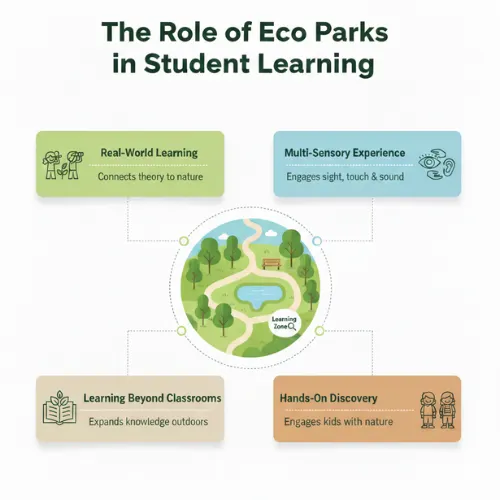
Eco parks provide a living classroom where students can directly observe, interact with, and learn from the natural environment. Unlike traditional classrooms, these parks offer multi-sensory learning experiences that make sustainability real and fun.
How eco parks teach recycling and sustainability:
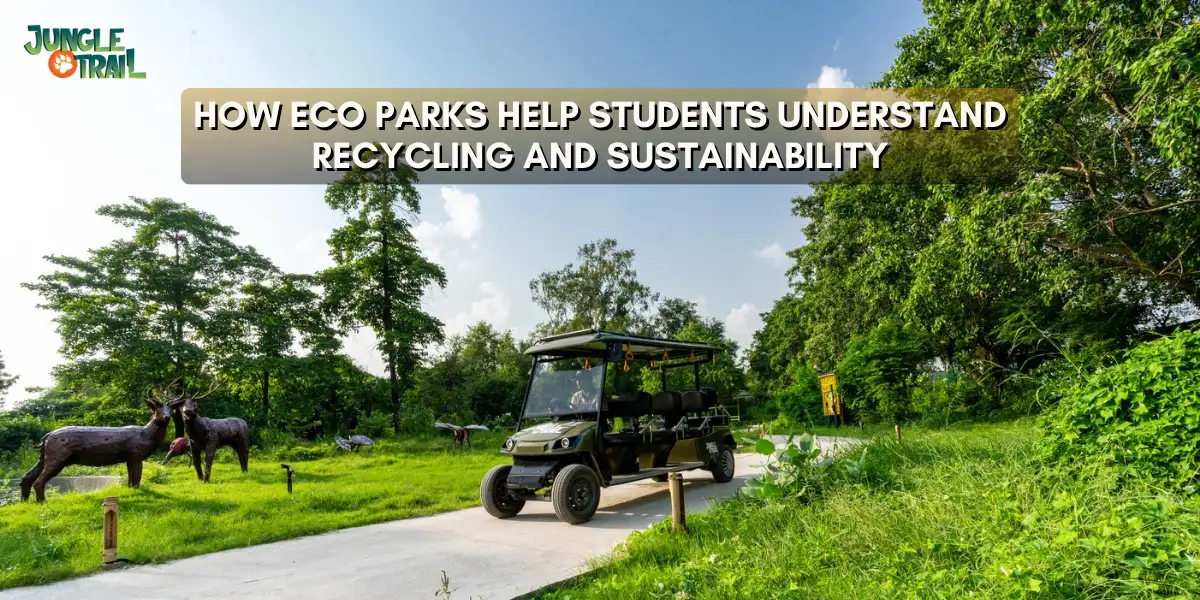
- Scrap-Art Installations: Students explore life-sized animal sculptures made from recycled materials. Each sculpture demonstrates how waste can be transformed into something valuable, reinforcing the principles of reuse and upcycling.
- Composting Zones: Hands-on composting sessions show students how organic waste turns into nutrient-rich soil, helping them understand circular resource management.
- Interactive Signage: Eco trails include boards explaining local flora, fauna, and the effects of pollution, teaching students environmental responsibility in a simple, engaging way.
- Waste Segregation Demonstrations: Students learn to separate biodegradable and non-biodegradable waste, reinforcing habits they can apply at home and school.
By combining visual, tactile, and intellectual learning, eco parks create experiences that students remember long after the visit.
Key Activities for Students at Eco Parks
1. Scrap Art Exploration
- Students walk through trails featuring creative sculptures made from recycled materials.
- Encourages critical thinking, imagination, and environmental awareness.
2. Nature Trails and Biodiversity Learning
- Guided walks teach students about native plants, insects, and wildlife.
- Helps children connect classroom concepts to real-world ecosystems.
3. Eco-Workshops
- Activities like DIY recycled crafts, eco-games, and conservation projects.
- Develops hands-on problem-solving skills and creativity.
4. Outdoor Adventure and Physical Learning
- Climbing, walking, and group activities promote physical health and coordination.
- Reinforces teamwork, leadership, and resilience.
5. Reflection and Observation Zones
- Areas for journaling or sketching allow students to document observations and insights, enhancing learning retention.
Health, Creativity, and Holistic Learning Benefits
Eco parks deliver multidimensional growth for students:
- Physical Fitness: Walking, climbing, and interactive trails promote active learning.
- Cognitive Skills: Observing wildlife, understanding recycling, and participating in workshops improve attention, memory, and problem-solving.
- Creativity: Transforming recycled materials into art stimulates imagination and innovation.
- Social and Emotional Development: Working in groups fosters communication, empathy, and collaboration.
- Screen-Free Engagement: Students experience real-world learning far beyond digital simulations.
By providing a safe and engaging environment, eco parks help students develop holistic growth while fostering environmental responsibility.
Case Study: Jungle Trail Noida
Jungle Trail Noida is a premier example of an eco park combining learning, adventure, and sustainability.
Highlights for Students:
- Scrap-Art Wildlife Sculptures: Life-sized animal models made from recycled materials teach students about reuse and creativity.
- Educational Signage and Guided Trails: Students learn biodiversity, waste management, and sustainability while exploring nature.
- Adventure and Physical Activities: Safe rope trails, walking paths, and climbing areas support physical development.
- Picnic and Reflection Areas: Families and students can relax while discussing lessons learned in a natural setting.
Impact: Students leave with practical knowledge about recycling, environmental stewardship, and creativity, making their visit an immersive educational experience.
Practical Tips for Teachers and Parents
- Plan Ahead: Schedule visits during cooler parts of the day and arrange guided tours if available.
- Prepare Students: Introduce recycling concepts and sustainability topics before the trip.
- Packing Essentials: Water bottles, sun protection, hats, snacks, and notebooks for observations.
- Encourage Participation: Let students document observations, create eco-art, or participate in composting activities.
- Safety First: Supervise children during physical or adventure activities and follow park guidelines.
FAQs: How Eco Parks Help Students Understand Recycling and Sustainability
Q1: Which age group benefits most from eco park visits?
A: Students aged 6–16 benefit most, though preschoolers can enjoy interactive trails with supervision.
Q2: How do eco parks teach recycling effectively?
A: Through hands-on activities, scrap-art projects, and waste segregation demonstrations, students learn recycling practically and memorably.
Q3: Can schools organize group outings to eco parks?
A: Yes, many eco parks, including Jungle Trail Noida, offer structured educational programs suitable for school trips.
Q4: Are eco park activities safe for children?
A: Absolutely. Guided trails, monitored adventure zones, and clean picnic areas ensure a safe and educational environment.
Q5: How do eco park experiences compare to classroom learning?
A: Eco parks provide hands-on, multi-sensory learning, which enhances retention and engagement far beyond traditional classroom lesson
Conclusion
Eco parks are transforming sustainability education for students in 2025. By combining scrap-art, nature trails, and interactive workshops, these parks create engaging, hands-on learning experiences that teach children about recycling, conservation, and environmental responsibility.
Jungle Trail Noida exemplifies this approach, offering a perfect blend of adventure, creativity, and environmental education. Students gain practical knowledge, holistic growth, and memorable outdoor experiences, all while building a lifelong appreciation for the planet.