
Table of Contents
Here’s a question worth pausing on.
If learning truly works, why do so many experiences disappear the moment children step outside?
Why does a museum visit often end with silence
While a walk through an outdoor learning park sparks conversations days later?
Parents, teachers, and even students feel this difference instinctively.
The challenge is explaining why it happens.
The answer lies not in what is taught, but how learning is experienced.
The Choice Families and Educators Are Quietly Rethinking
In Delhi NCR, choices are no longer limited.
Families, schools, and colleges have access to museums, galleries, exhibitions, and learning spaces of every kind.
So the question has changed.
It’s no longer “Where can we go?”
It’s “Where will learning actually stay?”
Parents want learning that doesn’t feel forced. High school students want relevance. College students want ideas that connect to real life and not just theory alone.
Indoor museums and outdoor learning parks offer very different answers to that need.
How Indoor Museums Typically Teach
Museums have long been treated as the gold standard of education outside classrooms. And for good reason, they preserve history, research, and knowledge.
But their structure follows a familiar pattern:
- Information is presented through text
- Objects are protected behind glass
- Movement is controlled
- Silence is expected
- Learning flows one way: display → viewer
For adults, this works.
For students still developing curiosity, critical thinking, and attention control, it often doesn’t.
High school students skim.
College students observe briefly and move on.
Parents quietly notice attention slipping.
Not because students aren’t capable—but because the format demands patience before curiosity forms.
How Outdoor Learning Parks Teach Differently
Outdoor learning parks reverse that order.
They begin with curiosity, not explanation.
Instead of asking visitors to slow down first, they allow movement.
Instead of presenting conclusions, they present surroundings.
Learning happens through:
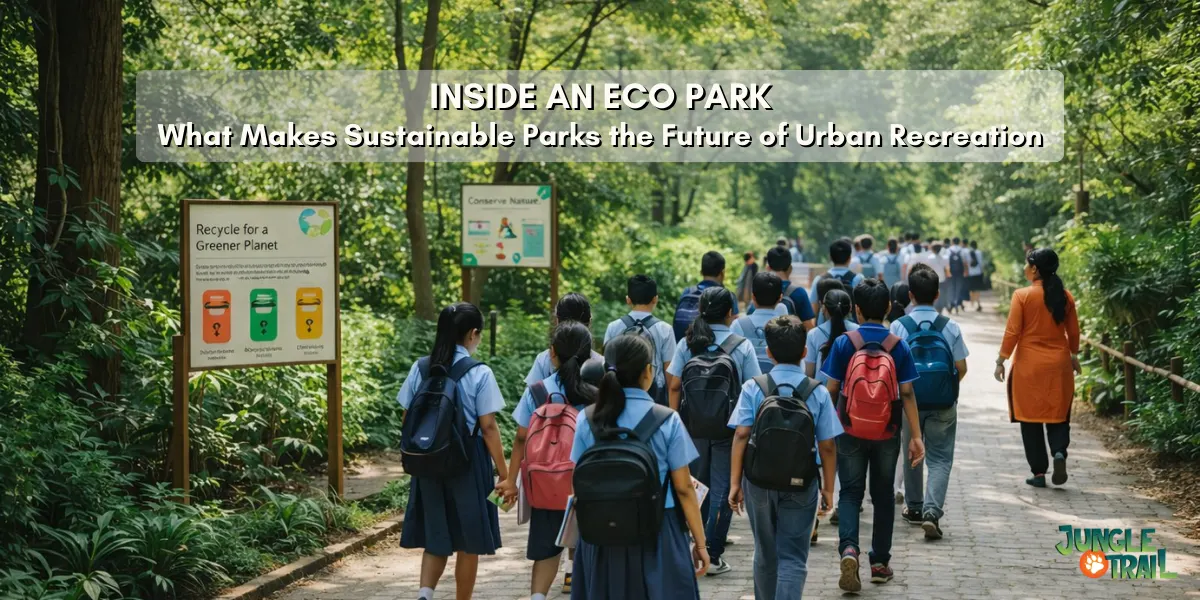
- Walking
- Observing
- Asking questions
- Making personal connections
This matters deeply for high school and college students who are learning how to think, not just what to remember.
The Learning Difference No One Talks About
Here’s the uncomfortable truth:
Many indoor learning spaces expect students to behave like researchers before they’ve developed the mindset of one.
Outdoor learning parks don’t. Outdoor Parks let interest lead. They let questions form naturally. They allow pauses, detours, and conversation.
That freedom is not casual, but it is educational.
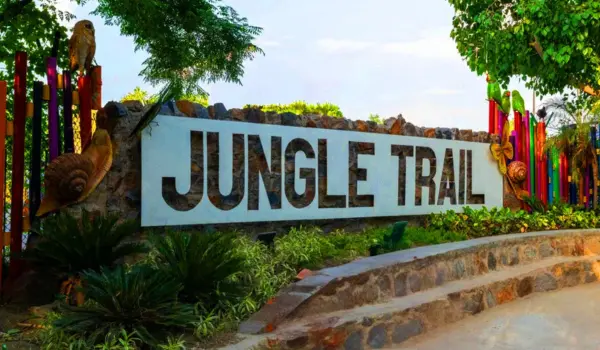
Where Jungle Trail Fits Into This Shift
Jungle Trail was built around a simple belief:
Learning should feel real before it feels informative.
Instead of compressing ideas into text-heavy displays, it spreads them across space. Instead of controlling how visitors move, it allows freedom and exploration.
That single difference changes everything from engagement to recall.

An Animal Sculpture Park That Teaches Through Observation
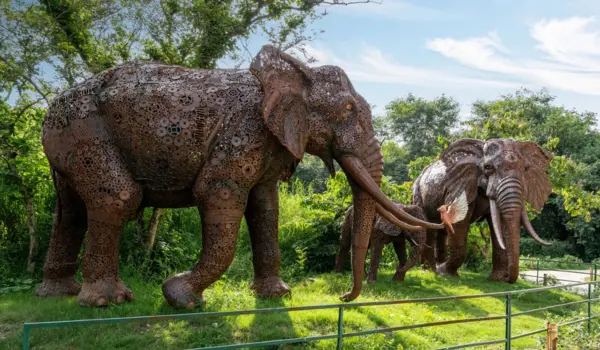
At first glance, Jungle Trail is an animal sculpture park.
But spend a little time there, and something becomes clear.
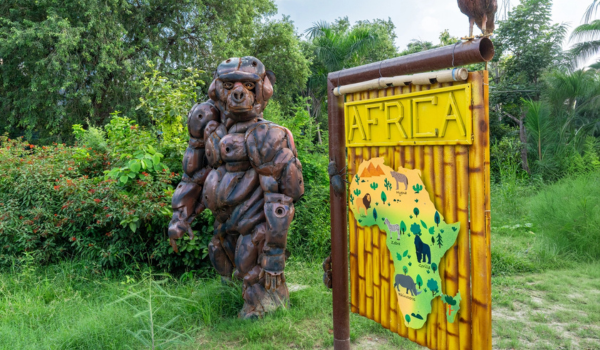
Every structure is made from recycled material.
Nothing is decorative without purpose. Nothing is placed only to be seen; it’s placed to be noticed.
High school students begin asking why materials were chosen.
College students start connecting sustainability with design, waste, and responsibility.
No one is lecturing.
Learning unfolds naturally.
Why Sustainability Makes Sense Here (Without Being Explained)
Sustainability often fails because it’s taught abstractly.
Charts. Terms. Definitions.
At Jungle Trail, sustainability is physical.
Visitors see discarded materials transformed into animals at real scale.
They understand reuse without being told to understand it.
This kind of eco-education works because it connects cause and effect visually—something indoor spaces struggle to do.
Parents often notice conversations continuing at home.
That’s when learning becomes meaningful.
Museums vs Outdoor Learning Parks: A Clear Comparison
Museums often keep kids stuck in one spot, quietly reading labels or standing behind glass. Attention drifts quickly. Outdoor learning parks, however, let families and students move freely. They explore at their own pace. They ask questions as they notice things. Every discovery connects to real life, turning a simple weekend outing in Delhi NCR into something memorable and meaningful.
| Aspect | Indoor Museums | Outdoor Learning Parks |
| Learning flow | Read → understand | See → question → connect |
| Physical movement | Restricted | Natural |
| Engagement span | Short for students | Longe |
| Emotional connection | Low | Strong |
| Learning recall | Limited | High |
| Suitability for school groups | Controlled | Flexible |
| Suitability for college exploration | Passive | Reflective |
This isn’t about which is “better” in theory.
It’s about which works in practice.

Why High School Students Respond Better Outdoors
High school students are at a turning point.
They question more.
They resist forced instruction.
They remember what feels relevant.
Outdoor learning parks allow them to:
- Learn without being tested
- Observe without instruction
- Form opinions instead of memorising facts
That autonomy builds confidence, which is something that the museums rarely prioritise.
Why College Students Find Deeper Value
College students don’t want simplified answers.
They want context.
Outdoor learning parks provide:
- Real-world examples of sustainability
- Connections between design, environment, and human impact
- Space to think without interruption
Many college students visit not just to see, but to reflect, photograph, sketch, or discuss.
That reflective space is rare indoors.
Designed for Groups, Not Crowds
Another overlooked difference is how people feel inside the space.
Indoor museums manage visitors.
Outdoor learning parks welcome participants.
At Jungle Trail, movement isn’t monitored.
Paths are open.
Conversations don’t feel intrusive.
Parents walk beside students—not behind them.
Teachers guide, rather than control.
A Better Learning Choice for Delhi NCR
Delhi NCR families, schools, and colleges are increasingly selective.
They look for:
- Screen-free learning
- Outdoor educational experiences
- Places that work for mixed age groups
- Learning that feels relevant, not outdated
This is why outdoor learning parks are becoming preferred destinations for educational outings, not just weekend visits.
How to Experience This Kind of Learning Fully
To get the most out of an outdoor learning park:
- Don’t rush
- Allow silence
- Let questions lead
- Walk without a fixed goal
Learning doesn’t happen on schedule here.
It happens through attention.
That’s what makes Jungle Trail different from structured indoor spaces.
Parents Also Ask
1. Are outdoor learning parks better than museums for students?
They often are—especially for high school and college students—because learning feels self-directed rather than imposed.
2. Can school groups visit safely?
Yes. Outdoor learning parks are designed for movement, supervision, and open exploration without crowd pressure.
3. Do college students find value here?
Absolutely. Many engage with sustainability, design, and environmental responsibility in ways classrooms can’t replicate.
4. Is this type of learning effective without explanations?
Yes. Observation-led learning improves recall and curiosity far more than forced instruction.
5. Does outdoor learning reduce screen dependency?
It naturally does. Engagement replaces distraction.
Why Outdoor Learning Parks Matter More Today
Students today are overstimulated—but under-engaged.
They consume information constantly, yet struggle to connect it meaningfully.
Outdoor learning parks slow that process down. They allow thinking to happen before interpretation.They bring learning back into the physical world.
Final Thoughts: Choosing Learning That Lasts
Museums preserve knowledge.
Outdoor learning parks help students understand it.
They turn observation into curiosity. They turn movement into memory. They turn visits into conversations that continue.
That’s what Jungle Trail represents—not as an attraction, but as a learning environment built for today’s students and tomorrow’s thinking.
Ready to Choose Learning That Feels Real?
If you’re planning an educational visit—for students, families, or institutions—consider where learning is more likely to stay.
Sometimes, the most powerful lessons don’t come from standing still.
They come from walking, noticing, and asking better questions—together.
👉 Plan your visit to Jungle Trail and experience learning beyond walls.