
Table of Contents
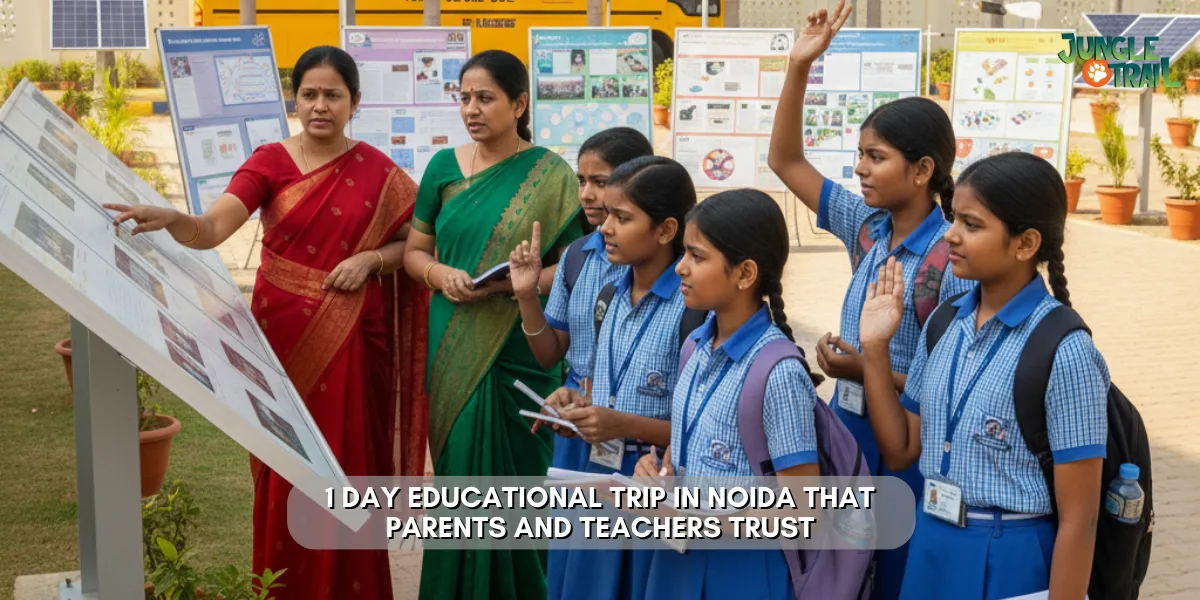
Planning a 1-day educational trip is rarely about simply choosing the most entertaining destination. For schools, it is a careful decision shaped by multiple factors: safety, learning outcomes, travel time, and the responsibility of reassuring parents. Teachers know that a successful trip should enrich students without exhausting them. Parents want confidence that their children are gaining meaningful knowledge, not just spending a day outside the classroom.
In and around Noida, many destinations claim to offer educational experiences. But how many truly meet the needs of young students within the limited window of a single school day? The most effective 1 day trips balance learning, comfort, and calm exploration, giving children the chance to observe, question, and reflect.
The goal is not only to pick a location that sparks curiosity, but also one that allows children to absorb the experience without being rushed or overwhelmed. After all, what is the point of a trip if students return tired, distracted, or bored?
Who This Guide Is For?
This guide is designed for schools planning 1 day educational visits in Noida for primary and middle school students, usually from Classes 1 to 8. At this age, children learn best through practical experiences, observation, and guided exploration, rather than long lectures or packed schedules.
A thoughtfully planned trip respects children’s attention spans and energy levels, while also acknowledging the practical realities teachers face, including:
- Limited time to travel and complete activities
- Supervising large groups of students
- Ensuring every child returns safely
Can students truly benefit if they arrive tired or stressed? A successful trip is one that leaves everyone energized, engaged, and inspired.

What Schools Look For in a 1 Day Educational Trip?
Schools rarely prioritize novelty alone. They are looking for balance, safety, and meaningful experiences.
A suitable 1-day trip from Noida usually meets several essential criteria:
- Travel time is within one to two hours, so students arrive ready to learn. Long bus rides can drain energy before the day even begins.
- Supervision-friendly layouts with open spaces and clearly defined paths making it easier for teachers to monitor children safely.
- Clean facilities and shaded rest areas to help children rest comfortably.
- Calm learning environments where students are not overstimulated by noise, crowds, or cluttered spaces.
If a trip leaves students exhausted or distracted, can it truly be called educational?
Why Learning Outcomes Matter More Than Attractions?
The true value of a school trip is not in how many activities are offered but in what students take away.
For younger children, this may involve a better understanding of animals, nature, or the concept of reuse. Observing that materials can be transformed rather than discarded leaves a lasting impression.
For older students, the learning often deepens into questions about human impact, responsibility, and sustainability. Trips that quietly reinforce classroom concepts tend to leave a longer-lasting impression than those that focus purely on entertainment.
Isn’t it more meaningful when children return home not just with fun stories, but with questions, insights, and curiosity to learn more?
Understanding the Needs of Students
Primary School Students (Classes 1–5)
Primary school children respond best to visual, sensory, and physical experiences. They learn by seeing, touching, and listening to stories. Open spaces where students can walk, observe, and connect ideas visually are far more effective than structured lectures or crowded displays.
Learning should feel effortless at this stage. Concepts such as recycling, wildlife, or environmental responsibility stay with children when they are demonstrated through hands-on examples rather than abstract explanations. Even small prompts like “What happens to trash if we throw it away?” can spark curiosity when children see the impact in real life.
Middle School Students (Classes 6–8)
Middle school students begin to think more critically. They ask questions like:
- Why is this designed this way?
- How does our behavior affect the environment?
- What can we do to make a difference?
Trips for this age group work best when children have space to observe, discuss, and reflect. Instead of being told what to think, students benefit from seeing real-world examples and forming their own conclusions with guidance.
When children explore concepts in real-world contexts, learning becomes active, personal, and memorable. Isn’t it exciting when students connect classroom lessons with real-life experiences?
What Makes a Trip Truly Educational?
An educational trip does not need to replicate the classroom. In fact, the most effective learning often happens outside formal settings.
A trip becomes meaningful when children can:
- Explore at their own pace
- Interact with real materials and concepts
- Receive explanations tied directly to what they see
Places that emphasize storytelling, visual cues, and movement create deeper engagement than environments built around noise or flashy attractions.
Screen-free settings enhance learning further. Without phones or tablets, children focus naturally on their surroundings. When was the last time a group of students noticed every detail in nature instead of glancing at a screen?
Types of 1 Day Educational Trips From Noida
Schools in Noida often consider several types of destinations for 1 day trips:
- Eco and sustainability parks: Teach students about reuse, conservation, and environmental responsibility through hands-on learning.
- Nature and wildlife learning spaces: Observe ecosystems, understand animal behavior, and explore habitats safely.
- Science and environment parks: Explain concepts through demonstrations and interactive experiments.
- Heritage and cultural sites: Connect students with history and tradition through immersive experiences.
Among these, eco parks have become increasingly popular, especially when sustainability is part of the curriculum. They allow students to explore art, science, and nature in one day while learning responsibility and teamwork.

Why Jungle Trail Noida Is More Than Just an Eco Park?
Learning, Art, and Sustainability
Jungle Trail Noida offers an educational, immersive, and ethical experience for students and families alike. Unlike traditional zoos, it does not display live animals. Instead, it features more than 800 animal sculptures from all continents, crafted from scrap and recycled materials.
Each sculpture represents a lesson in sustainability, wildlife conservation, and creativity. Students can explore lions, elephants, penguins, and polar bears while learning how art can replicate nature responsibly.
This approach makes Jungle Trail safer, cleaner, and more flexible than conventional zoos. Students can walk freely, observe animals closely, and understand ecosystems, habitats, and behaviors through hands-on interaction and storytelling.
Can a traditional zoo provide such a creative, ethical learning experience?
Exploration That Teaches
The park encourages students to explore at their own pace. Children can rest in shaded areas or cafes, interact with installations, and follow clear walking paths.
As they move through the park, they discover global connections, understanding continents, climates, and habitats. Guided activities focus on teamwork, observation, and creativity. Children learn that waste can become art, imagination teaches responsibility, and sustainability is achievable in everyday life.
By combining visual storytelling, movement, and reflection, Jungle Trail offers lessons in environmental stewardship that traditional zoos cannot. Students enjoy a fun, responsible day out while gaining lasting knowledge about wildlife and conservation.
Why Eco Parks Work So Well?
Eco parks provide real materials, open layouts, and storytelling that make abstract concepts tangible. Students walk through ideas, see them in action, and internalize lessons about reuse, conservation, and sustainability.
Without live animals, safety concerns are minimal, yet learning remains meaningful. Parks like Jungle Trail Noida exemplify this model. With wildlife-inspired installations and clear paths, students can move comfortably while engaging with sustainability-focused education.
Safety and Practical Considerations
Beyond learning outcomes, safety and logistics are crucial for schools planning trips.
- Clear entry and exit points
- Visible walking paths
- Shaded areas for rest
- Basic medical preparedness
When spaces are designed for group movement, teachers can focus on guiding students rather than managing logistics. Ease of supervision often determines whether a school plans repeat visits.
Questions Parents Often Ask
1. Is this trip safe for younger children?
Yes. Jungle Trail Noida is fully supervised with clear paths and trained facilitators.
2. Will my child actually learn?
Absolutely. Sculptures, waste-to-art installations, and guided storytelling teach wildlife, sustainability, and conservation.
3. What makes Jungle Trail different from other parks or zoos?
It combines education, creativity, and ethical wildlife awareness. Students observe, think critically, and learn about responsibility, teamwork, and sustainability while having fun.
4. Is the trip suitable for all age groups?
Yes. Younger students focus on observation and movement. Older students engage in discussion and reflection.
5. Are there facilities for resting and dining
Yes. Shaded areas and cafes allow children to rest, socialize, and recharge during the visit.
.
Trips Children Remember
The best 1-day educational trips honor curiosity and guidance. When learning feels natural, the environment is safe, and every step sparks discovery, students leave with more than facts—they leave with questions, insights, and awareness that last far beyond the classroom.
By choosing destinations that balance education, safety, creativity, and calm exploration, schools provide experiences that become meaningful chapters in a child’s learning journey.
Allow your students to explore ethical wildlife learning, creativity, and nature at Jungle Trail Noida.
👉 Plan your visit today and watch learning come alive

Leave a Reply